
My latest column is up at Carlsbad Current Argus.
Red Canyon
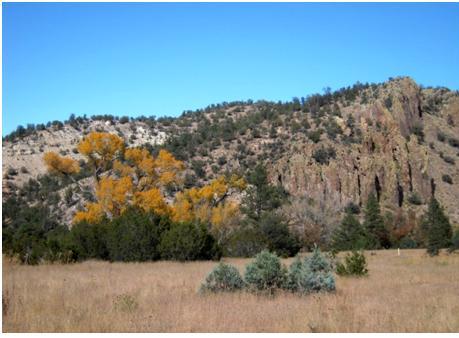
August 1 was the date Nana gave the Chloride posse a painful lesson in irregular warfare in Red Canyon. The Fort Bayard Story adds some details I had not previously uncovered. While the Anglos from the mining camps of Chloride and Fairview were led by Frank Mitchell, the Hispanic contingent was gathered by Bentura Trujillo at San Marcial, which was then the second largest town in Socorro County thanks to the arrival of the railroad the previous year. It makes sense that volunteers would have been drawn from along the Rio Grande, where Nana’s raiders had struck in passing a few days previously, rather than from Cuchillo, Placitas and Monticello farther up the Canada Alamosa, which had not yet been harmed and were in any case more inclined to be in sympathy with the Apaches.
According to the Fort Bayard book, the posse was on its second day in the field when attacked, which supports my view that the ambush was in West Red Canyon (or possibly Red Rock Canyon, as Bennett told Lummis) rather than East Red Canyon. The Fort Bayard version also reinforces my opinion (contra Wellman’s account) that the posse was not tracking the hostiles and in fact had no idea the Apaches were anywhere in the area.
That scarcely excuses their carelessness in releasing their horses to graze under the care of just one guard, of course. If the horses had at least been hobbled, the disaster might not have been so complete. Eight were wounded as the possemen “remained all day long, pinned down by the bullets fired by the Apaches from above,” according to The Fort Bayard Story (p. 151) but no mention is made of the defeated civilians meeting up with Lt. Guilfoyle afterwards, or the shepherd killed at the mouth of the canyon. The only man killed in the ambush was Pedro Vallejos, who had the bad luck to be left guarding the horses while his comrades snoozed under the trees.
Together with the later defeat Nana inflicted on the Lake Valley posse, the Red Canyon ambush helped convince the people of southwestern New Mexico of the need for an organized militia force that would (at least theoretically) be better organized, trained and disciplined to respond to future raids.
Silver City
Just back from four-day trip to Silver City, Red Rock and the Burro Mountains, with a stop at Fort Bayard. High winds and a dust storm, heat and heavy rain, all that makes NM camping memorable. The Red Rock Wildlife Refuge was a wasted trip, no desert bighorns available for viewing while I was there, and I had no luck in my primary mission, which was to check WNMU library for circa 1880 local papers.
But I did have the great good fortune to meet Andrea Jaquez, co-author of The Fort Bayard Story, Far more than just the history of the military post, her book is an invaluable resource for the Apache Wars in NM. I was kicking myself for not having discovered the title before this, until I checked on Amazon and Alibris and discovered it’s both rare and expensive. Since I just laid out $60 for Kühn’s Chronicles of War from Arizona Historical Society and another $40 for two more books I picked up in a great little bookstore in Silver City, I’ll have to put off purchasing The Fort Bayard Story for a bit.
I’m accumulating an intimidating backlog of reading on the Nana Project, not to mention my other pursuits. I’m still digesting Hutton’s new Apache Wars and working on Aleshire’s bio of Victorio’s sister Lozen and a bio of Chief Loco. Now I’ve added the two books brought back from Silver City. I never expected the course load would be so heavy when I signed up for this class!
Sweetwater Spring
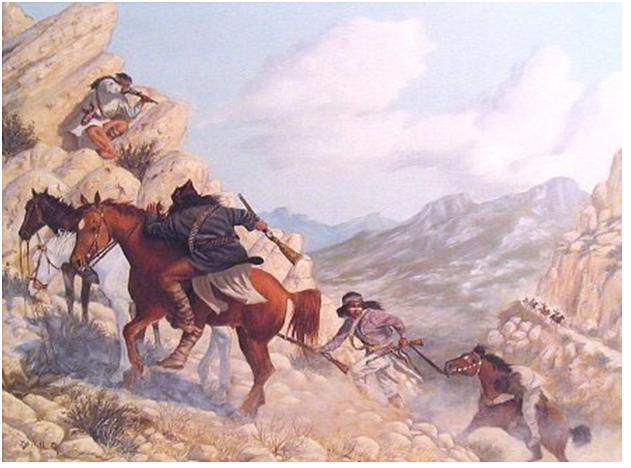
Today in 1881 Guifoyle and Bennett, led by Chihuahua and his scouts, finally caught up to Nana “in a canyon at the north end of the San Andres.” The canyon is unspecified, but I suspect it was Sweetwater Spring, a favorite Apache campground at the base of Salinas Peak, the Chihenne sacred mountain.
If you take the twice-annual tour to Trinity Site, where the first A-bomb was tested July 16, 1945, you can glimpse the San Andres in the distance, although my map work wasn’t good enough to determine which if any of the peaks visible was Salinas. The mountains have been off limits to any but “authorized personnel” for the past 70 years. Closest I was able to approach was on the Carrizozo Land Partnership off-road trails, which I hope to try again someday.
Colorado August 2010
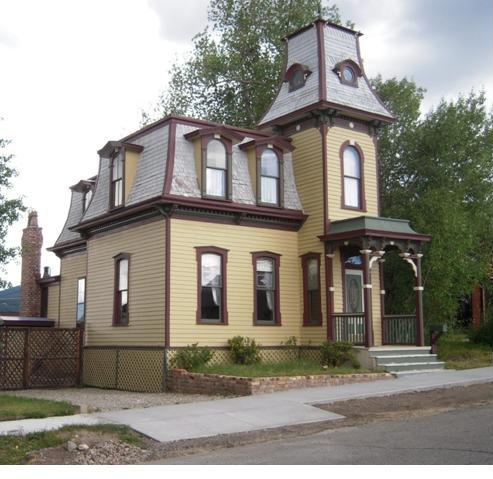
Off topic but I promised an old friend I would fill him in on our trip to Colorado several years ago. Just seems easier to post it here for anyone interested.
Arena Blanca
July 19 was the day Nana and his men arrived at the wagon road skirting White Sands. Eugene Chihuahua describes his father’s encounter with Kaytennae (p.48 of Indeh) in detail that varies on some points from other versions of the event, but it’s clear scouts and hostiles knew each other and simply declined to fight on this occasion, probably because they were out of sight of Bennett and Guilfoyle.
Chapter 6
I’ve posted Chapter 6, “War to the Knife” in The Raid. The fight in the Cuchillo Negros was the climactic incident in the raid, and my interpretation of the event differs from other histories, which treat it as just one more clash between the raiders and their pursuers. To me it seems obvious from Burnett’s first-person account that on this occasion Nana took the offensive against the cavalry. He won the field but failed in his ultimate objective, which was to clear the way to the sacred spring at Ojo Caliente.
July 17: Day One
Although his war party raided in Mexico before crossing the Rio Grande into Texas on the 13th, July 17, 1881, is official Opening Day of Nana’s Raid. That’s the day the hostiles unequivocally announced their presence in the territory by jumping Lt. Guilfoyle’s pack train in Alamo Canyon. It also marks the first of many puzzles surrounding the raid. No mystery over why the Apaches would ambush an Army supply train, but why did they linger in the neighborhood for another two days?
Chapter 5
I’ve reposted Chapter 5 , although I have certain reservations. Bob Roland is certain Capt. Parker’s fight took place in Cienega Canyon, and I respect his opinion. But that canyon is north of Alamocita Creek and it seems to me Parker and his men were patrolling the Rio Salado and so must have cut the hostiles’ trail somewhere along there and followed the war party south. Plus there’s the proximity of “Monument Hill” and “Canyon de los Negros” adjacent to Carrizozo Canyon. Hard to explain those names unless they’re a reference to the buffalo soldiers’ clash with Nana. Finally, there’s the fact that Cienega Canyon is now Navajo land and posted against trespassing, while Carrizozo Canyon is public land and accessible (with some difficulty) to those seeking to retrace Nana’s Raid.
Wildfires
This is not a news site and I’m not equipped for or interested in providing up-to-the-minute bulletins. But since I have conveyed some fire info recently, it’s only fair to offer an update. The North Fire in the San Mateos has apparently burned itself out at something over 42,000 acres, while the Puertecito Fire, a new blaze 15 miles south of Magdalena, was at 19 acres and 0% containment a couple of days ago. Just four firefighters were on scene as of last news, which seems to indicate Smokey is not especially concerned about this one.
 Tracking Nana