A Ghost Boat on the Colorado

There were no Colorado River Queens to match the Mississippi riverboats in elegance and size. The Colorado was a very different river back before we converted it into one of the planet’s greatest civil engineering projects. A shallow draft was needed to navigate the constantly shifting sandbars, with an engine and boiler strong enough to breast the current in the canyons. (This photo is the “Cochan” on the Colorado River near Yuma, Arizona. This picture was taken in 1900.)

Considering how few Colorado steamboats there were compared to Eastern rivers, it’s a pleasurable surprise to discover at least one ghost boat buried down in the delta. The Explorer, one of the first boats on the river, broke free of its moorings at Pilot Knob and was swept 60 miles down stream in the spring flood. A survey party found the remains in 1929, , according to this excellent history.

Ghost Boats

My fascination with the sunken boats emerging from our drought-stricken reservoirs has roots 68 years deep, to the September 1954 issue of Walt Disney’s Uncle $crooge. I was only 8 years old, but already an avid reader not of school books but comic books. And the adventures of Uncle Scrooge, the three nephews and Donald were my favorites.

Carl Barks (March 27, 1901 – August 25, 2000) was an American cartoonist, author, and painter. He is best known for his work in Disney comic books, as the writer and artist of the first Donald Duck stories and as the creator of Scrooge McDuck. He worked anonymously until late in his career; fans dubbed him The Duck Man and The Good Duck Artist.

In the September issue, Scrooge and the gang follow an arrowhead clue deep into the desert, where to the well-preserved wreck of a 400-year old Spanish galleon.

The Last Man

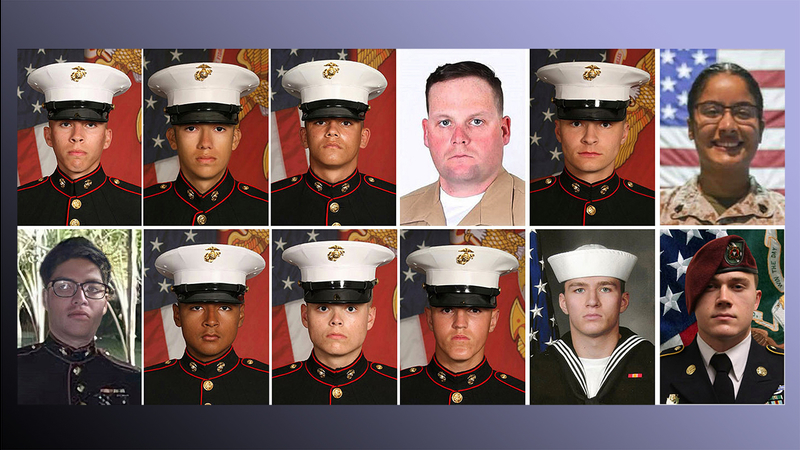
50 years ago John Kerry launched his political career by asking: “How do you ask a man to be the last man to die for a mistake?’ I don’t believe we ever got that man’s name after Vietnam, but we know the names and faces of (hopefully) the last U.S. casualties in our latest lost war. The list of deceased US servicemen, their ages and hometowns.

Marine Corps Staff Sgt. Darin T. Hoover, 31, Salt Lake City, Utah.

Marine Corps Sgt. Johanny Rosariopichardo, 25, Lawrence, Massachusetts.

Marine Corps Sgt. Nicole L. Gee, 23, Sacramento, California.

Marine Corps Cpl. Hunter Lopez, 22, Indio, California.

Marine Corps Cpl. Daegan W. Page, 23, Omaha, Nebraska.

Marine Corps Cpl. Humberto A. Sanchez, 22, Logansport, Indiana

Marine Corps Lance Cpl. David L. Espinoza, 20, of Rio Bravo, Texas

Marine Corps Lance Cpl. Jared M. Schmitz, 20, St. Charles, Missouri.

Marine Corps Lance Cpl. Rylee J. McCollum, 20, Jackson, Wyoming.

Marine Corps Lance Cpl. Dylan R. Merola, 20, Rancho Cucamonga, California.

Marine Corps Lance Cpl. Kareem M. Nikoui, 20, Norco, California.

Navy Hospitalman Maxton W. Soviak, 22, Berlin Heights, Ohio.

Army Staff Sgt. Ryan C. Knauss, 23, Corryton, Tennessee.

Kipling wrote a fitting epitaph, not for these courageous young people but for the fools that sent them into harm’s way and then turned their backs and walked away:

A DEAD STATESMAN

    I could not dig: I dared not rob:
    Therefore I lied to please the mob.
    Now all my lies are proved untrue
    And I must face the men I slew.
    What tale shall serve me here among
    Mine angry and defrauded young?

“And yet it moves.”

A post at Today in History on Galileo Galilei serves as a timely reminder when we are so often told that “the science is settled” or this theory is “disinformation” and that is a baseless “conspiracy theory.” The Inquisitors who sentenced the great astronomer to a lifetime of house arrest are with us yet, and stronger today than in my youth.

‘the judgments of the Lord’

I rose to the defense of Black Jack Logan in an earlier post, but today it’s appropriate to revisit the General John Logan Memorial with an emphasis on the “Memorial” rather than the man whose name it bears. Logan flourishes his country’s flag astride a horse in Chicago’s Grant Park not for his military qualities (he was abler than most of the Union’s generals, but that’s faint praise). His most significant and lasting achievement came in 1868 when as Commander In Chief of the Grand Army of the Republic he called on his fellow veterans to make May 30 a national day of remembrance for their 365,000 comrades who gave their lives to preserve the Union.

They also not coincidentally ended slavery in the “Land of the Free.” Those today who have forgotten the sacrifice that entailed would do well to revisit Lincoln’s Second Inaugural: “Fondly do we hope, fervently do we pray, that this mighty scourge of war may speedily pass away. Yet, if God wills that it continue until all the wealth piled by the bondsman’s two hundred and fifty years of unrequited toil shall be sunk, and until every drop of blood drawn with the lash shall be paid by another drawn with the sword, as was said three thousand years ago, so still it must be said ‘the judgments of the Lord are true and righteous altogether.'”

Not Constantinople

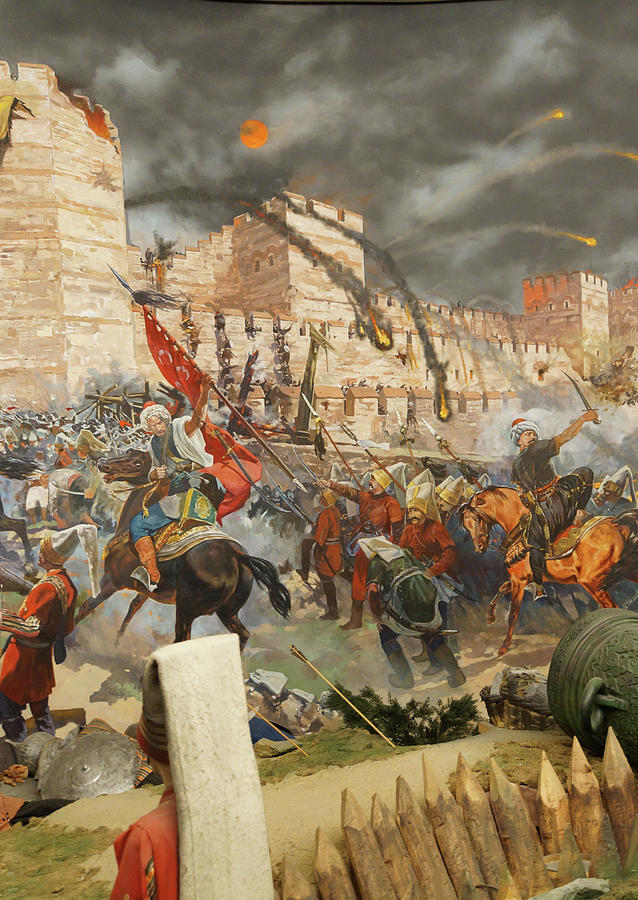
Coincidental with our own Memorial Day, May 29 marks the 568th anniversary of the fall of the city built by the Caesar Constantine to the Turks in 1453. This Christian disaster, well told by Roger Crowley, extinguished the last flickering embers of the empire that ruled for more than a 1,000 years. By comparison, the Czars ruled Russia for about half that and their successors for scarcely 70, the British lasted perhaps 200, the French on and off for only 60, the Italians and Germans even less. The American Century (from the Spanish-American War to date) has lasted nearly 125. Constantine’s city still stands, but its great church is now a mosque and “you can’t go back to Constantinople, been a long time gone.”

Jed Smith

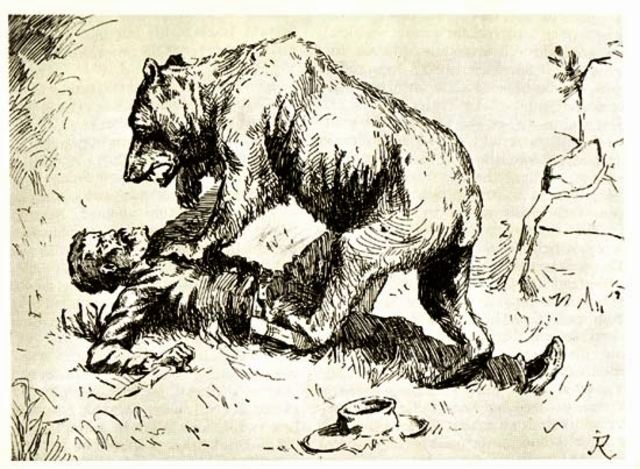
Another man in Nana’s mold worth remembering: Jedediah Strong Smith. A devout Christian who carried his Bible and a good rifle wherever he ventured, Jed was a double-tough mountain man who fought a wounded grizzly until his comrades arrived to drive the bear off and then calmly directed one of them in piecing back together and sewing up his torn face, scalp and ear. He survived and went on to discover the South Pass, opening the Oregon Trail to the Pacific Northwest. He next led a party of fellow trappers from the Salt Lake down through today’s Utah and across the Mojave to sunny southern California, becoming the first white man to cross that desolate terrain, and then brought the survivors back across the Sierra Nevada, through the Great Basin and back to Missouri. From there he adventured southwest along the new Santa Fe Trail. His luck finally ran out somewhere in today’s southwest Kansas when a party of marauding Comanches spooked his horse and overwhelmed him — but not before he killed three of them. That was 190 years ago today, on May 27, 1831.

.

“die like a hero going home.”

“Prepare a noble death song for the day when you go over the great divide.
When it comes your time to die, be not like those whose hearts are filled with the fear of death, so that when their time comes they weep and pray for a little more time to live their lives over again in a different way. Sing your death song and die like a hero going home.”
~ Tecumseh