out of luck III

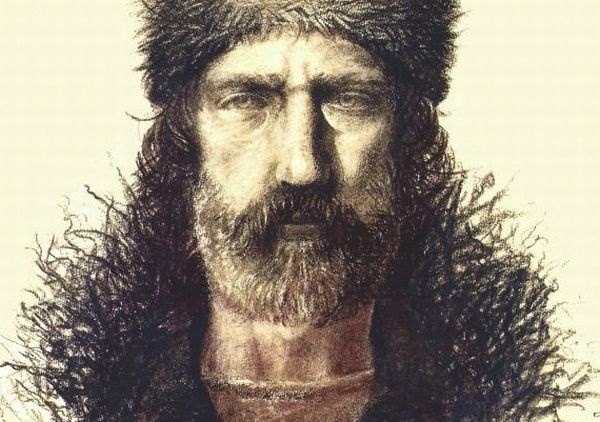
Re wilderness survival (or not), Alb Journal reports a 59-year-old backpacker missing since Nov. 14 up near Chama. If he’s still alive and still in the woods, he’s one tough hombre. Also news that Douglas Tompkins, 72, lost his life in a kayaking accident in Chile. Tompkins started as a partner in a small outdoors gear shop in North Beach; 25 years ago he sold his share of North Face for $150M and moved to South America to save the  planet, or at least what part of it he could buy up. Kind of like Ted Turner, only a much nicer guy. Kayaking on a remote mountain lake is probably the way he would have preferred to go.


F16 crash near Salinas Peak

Holloman AFB reports an F16 Fighting Falcon crashed near Salinas Peak, the Chihene sacred mountain now on White Sands MR.  Not clear from the news release whether the crash was actually on the Missile Range or closer to TorC, possibly on the Armendaris Ranch? “The crash site is in a remote location in rugged terrain. Travel to the crash site is discouraged until further notice.”

Truth or Consequences

Brief excursion to one of my favorite New Mexico towns, if for no more than the name. If you’re in town, don’t miss Xochi’s, a great bookstore on the main drag. Lots of reasonably priced used books, plus a great collection of Western and Southwestern history and Native American rare books. I could have spent days exploring the place and plan to go back again soon when I have $ to spend.


.

Chapter 12 revised

I’ve revised Chapter 12 based on a more thorough study of Homer Milford’s excellent (and exhaustive) history of the Lake Valley Mining District. I’ve also added the full document to the Sources section if the reader would like to know more of the sometimes confusing but fascinating history of the mines and the rogues gallery of characters involved.

Que Macho

Hunting alone in the Idaho back country, guy breaks his leg and crawls three miles to a trail, survives for four days before somebody finds him. A modern-day Hugh Glass.  Speaking of whom, Leonardo diCaprio has a new movie coming out this year based on the Glass epic.

Hard to picture diCaprio as a rugged survivalist, but we’ll see.  “Man in the Wilderness” back in 1971 was (roughly) based on the same story. It’s a great yarn, repeated in almost every book ever written about the mountain men, but Jim Bridger’s biographer casts doubt on at least some of the facts. The mountain men, after all, were famous for embroidering their tales, or even making them up out of whole cloth.

SSSerpentsss

Saturday’s Journal  ran a brief (doesn’t appear on the website) attributed to Alamogordo Animal Control advising of a “spike” in rattlesnake sightings. Story blames the recent rapid rise in restless rattler reports (sorry) to the wet monsoon season, but wet or dry, Spring and Fall are snake season in New Mexico, when an encounter is most likely. In winter the reptiles are dormant, in the summer they’re typically active at night but torpid in the shade during the heat of the day. It’s when the days are warm and nights cool that people and their pets run the greatest risk.

The Journal story led me back to J. Frank Dobie’s Rattlesnakes, which I haven’t read in years. Dobie was a good man with a campfire story, and his books are full of tall tales, so I wouldn’t look to him for reliable herpetological information. But the sheer number of anecdotes he’s collected is a useful reminder as to how common buzzworms once were in Texas and New Mexico. One of the many things that fascinate me about Nana was his “Power” over rattlesnakes. Whatever it was it would have made him a handy man to have around in those days.

While less common today, there are still a lot of rattlers in the back country, and since I’m promulgating a hiking and camping guide I would remind readers to watch their steps. A Carlsbad vet has some useful tips on “Your Dog and Rattlesnakes,” and I have my own advice Snake Season on how best to avoid trouble and how to cope with it if the worst happens.

Delays & Distractions

Seems like a long time since my last post. I don’t know how people manage to update their blogs every day, often with cogent, on-topic and readable prose. I’ve been writing again for NM News Svcs, latest was in Carlsbad Current Argus, and I’m working on another piece right now about the border. I’m reading  God’s Middle Finger , a great book about the Sierra Madre that reminds me of Hunter Thompson and P.J. O’Rourke rolled together and makes me want to get down that way again. I’d like to see Doubtful Canyon and the site of the McComas ambush, and maybe try to trace out some of the old Apache trails if I can get down into the Bootheel. I am also recently returned from a short trip to southern Colorado, educating myself about the Gold King Mine spill. It’s a shame the nat’l media has walked away from that story, compared to the often near-hysterical saturation they have given similar enviro-accidents in the past. Couldn’t be ’cause the story shows the EPA in a very unflattering light and raises questions not just about that agency’s competence but its broader agenda?


Out of Luck II

Hard on the heels of the two people found dead in a minivan stranded in the desert near Lake Mead comes news closer to home of two French tourists dead at White Sands Nat’l Monument. Their little boy survived, apparently because his dad gave him more than his share of the remaining water.

I’m a great believer in taking risks in the wilderness. Defying the odds not only promotes a healthy burst of adrenalin in the moment, but makes you savor life all the more (if you survive the experience). But I do feel bad for people who lose even before they realize they’ve been gambling with their lives. NPS Rangers, especially those who’ve spent time at the big-draw tourist attractions like Yellowstone, Bryce Canyon and Death Valley, have a hair-raising fund of stories about feckless urbanites who wander away from pavement in shorts and flip-flops, blissfully unaware that they’re literally treading the edge of disaster with every step.

Without disrespect to the deceased, it’s worthwhile to review the mistakes these French visitors made that contributed to their demise. First, despite prominently displayed warnings (in a number of languages) they walked off into the dunes at mid-day in August. Air temperature was 101˚F, and ground temp 20 degrees hotter. High in a cloudless sky the sun is pitiless, the glare from the dunes blinding even behind sunglasses and a billed cap, and there is no shade, not even a lonely bush to crawl under.

The tourists may have been misled by the name “Alkali Flats Trail,” where in fact there is no “trail” in the civilized European sense of the word and precious few “flats.” Only occasional poles mark the route over the ever-shifting dunes, and walking through the soft sand is painfully slow and quickly exhausting.

Second, the French family carried just two 20-oz. plastic water bottles. That’s 2 ½ pints, or a little more than a quart shared among two adults and a child. A gallon is four quarts. Remember Groucho: “a gal a day is enough for me”? A gallon of water is barely survivable in the Arena Blanca. If I were rash enough to hike there in August I would carry two gallons for myself alone. That’s 16 ½ lbs., but I know I would be glad to have it before I was through.

Finally, they split up. When the woman began feeling ill (the first symptoms of heat stroke) the man and boy left her to make her own way back to the vehicle while they continued on (impaired judgment is another symptom of heat stroke). She never made it back to their car, and the man collapsed about a mile farther along the trail. The little boy survived to be rescued by the rangers, partly because of his father’s selfless decision to give the boy more than his share of the remaining water, but mostly because the boy’s smaller body evaporated less moisture (skinny little people have a better chance in the desert than big, fat people; it’s a question of skin surface area).

Lost and Out of Luck

Because I have made so many solo trips into the deserts and mountains of the Southwest over the years, I’m a collector of “Lost” stories — people stranded, injured, drunk, disoriented or simply fuddled and far from help in adverse environments. My favorites, of course, are the survival stories, but there’s generally something to be learned from these tales one way or the other. Latest I’ve seen is of two unfortunates whose minivan got stuck on a sandy road near Lake Mead, out of cell phone range and soon out of both water and luck.

Lesson 1: Never go out into the desert without at least two days’ worth of water (a gal a day may be enough for Groucho, but  in the Nevada desert in August, you’ll crave more than that). Lesson 2: Always tell someone you trust where you’re going and when you expect to return (and be sure to let them know when you get back to civilization; few things are more embarrassing than turning on the TV in your motel room to find you’re the subject of a multi-agency search & rescue effort). Lesson 3: Don’t overestimate your fitness level, or your vehicle’s; a minivan is no ride to take off pavement. Finally, in Lesson 4, a friend of mine with considerable experience in S&R suggests these two might have saved themselves by taking off the vehicle’s spare tire, soaking it with gas siphoned out of the fuel tank, and setting it on fire. A burning tire will send up a column of thick, black smoke visible for miles. Plus you can make s’mores while you’re waiting for rescue (you did bring e-rats, didn’t you?)

The Rebel Flag Revisited

Our mayor, courageously defying the Texas tourists who keep Old Town’s shops afloat, has ordered the removal of the Confederate Flag from the Plaza. I have no particular affection for what we used to call the “Rebel Flag” when I was in college back in Illinois, but I believe rewriting (or even worse, simply  erasing) inconvenient bits of history is a dangerously slippery slope, especially in a land where we have so much history to regret. Several weeks ago, I was dismayed to meet a young woman born and raised in NM who had never heard of the Texican invasion during the Civil War. She explained that in her school New Mexico history was generally the last topic at the end of the term, and the teachers  skimmed over it as “not important.”  She had never heard of the Warm Springs Apaches, either.