Fire Season

I haven’t posted lately on the North Fire, which has now burned more than 30,000 acres in the San Mateos and is still going strong, and I don’t have the heart to follow the progress of the Dog Head Fire on the east side of the Manzanos or the fire closing on Show Low in AZ, or the fires in Utah, Colorado, California and elsewhere in the West. Nobody comes to this site for red-hot (sorry) news anyway. If you’re interested in tracking the various conflagrations, I generally look at NMFireInfo and Wildland Fire Assessment; otherwise just surf Yahoo and other news sites for the latest.

Personally, I find it too depressing. I hate Fire Season. I know it’s all part of Mother Nature’s Grand Plan (the bitch), the cycle of birth, growth, destruction and renewal that governs not just Western forests but all creation so comprehensively that it can’t be anything but God’s message writ large: this is life.

But I hate the smoke. You would think a forest fire smells like a campfire, but it doesn’t; my eyes itch and my nasal passages burn with it, my abused lungs labor for a breath of fresh air. And I hate the sense of dread it carries with it on the wind. Is it someplace I know and love? Have I ever hiked or camped there, and will I ever return?

I haven’t tracked the FS reports on my map, but it appears likely the North Fire has moved up Bear Trap Canyon toward Monica Saddle and is threatening to descend the ridge toward Monica Spring. I believe that’s approximately the same route Nana and his Raiders took through the mountains in 1881, and I know that country pretty well. The forest recovers, and it’s life-affirming to watch the progress over a generation. But in the immediate aftermath even a low-intensity ground fire scars the terrain for years. Mother Nature has time without end, but I personally don’t have a lot of years left.

It’s tempting to think we could remove fire from the forest ecosystem altogether. But we tried that  with disastrous results – which should make any thinking person pause to consider the hubris underlying our grandiose plans to control the climate. Now fires are “actively managed for multiple resource benefits.” It will probably be another generation before we know whether that strategy is more successful than Smokey’s old prescription of total eradication.

In the meantime, every time I see smoke in the mountains I think of James Baldwin’s rendition of the Biblical promise of the rainbow: “No more water, the fire next time.”
snakebit

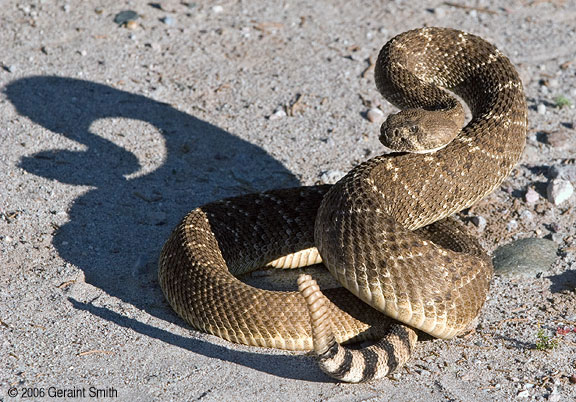
This story today about a guy in SC died of snakebite motivated me to repost a link to my own advice on the subject. Story says this fatality had some unspecified “pre-existing” condition (perhaps a weak heart?) and was 71 years old, which might account for his unusually fast demise. His buddy would have been better advised to let the victim set and calm down for 20-30 minutes to let the venom localize at the bite rather than exert himself in trying to get back to the vehicle, thus speeding circulation to the heart.  Story claims only half dozen people a year die from rattlesnake bites.  Other sources give a higher number, but it’s undoubtedly very rare. Whatever the death toll,  it’s a painful and traumatic experience best avoided if possible and treated appropriately if incurred.

Rancho Cebolla Updated

I’ve revised the “Warpath” entry on Rancho Cebolla, thanks to Bob Roland, who graciously took the time to revisit the site with me and point out all I had missed in my first visit a couple of years ago, including the graves of Domingo Gallegos and Jose Maria Vargas.

In revising the entry, I also turned up a pic of a little herd of burros that I saw in my previous trip up that way. I reported the sighting to a ranger at that time, and he seemed as surprised as I was to hear they were in the Cebolla Wilderness. I had thought of them as an Arizona problem, but apparently they’ve spread far and wide in the Southwest and even as far afield as South Dakota since Congress declared them “living symbols of the historic and pioneer spirit of the West” and granted them protected status 45 years ago.

In that fog of feel-good sentimentality, nobody stopped to consider that they’re randy little critters, well able to defend themselves against coyotes and other predators and excellently adapted to the arid Western environment. The burro population doubles every four years, creating an expensive headache for the BLM.  Like the feral horses everybody insists on calling “wild mustangs,” the burros compete with native wildlife (and range cattle)  for available forage and water, and the geometrically expanding population would quickly starve if the surplus wasn’t occasionally rounded up and removed. As with the horses, misguided sympathizers won’t allow the feds to slaughter the animals but instead insist the excess either be placed in a loving home or cared for at taxpayer expense — which the BLM estimates at $48,000 per head over the course of each captured  animal’s life.  Today, the taxpayers are spending $50 million a year to pasture and care for 47,000  horses and burros that have been removed from the open range.

“I urge people from across the country to go to an adoption event this year and bring home one of these icons of the West,” says BLM Director Neil Kornze. Good luck with that. Burros make expensive pets. Unless you’re planning to go prospecting, you’re better off with a good dog.


updated prologue

I’ve updated the prologue to add John Bourke’s thumbnail description of Nané (as Bourke spells it). Bourke was a keen observer whose views on the Apaches were sympathetic but unclouded by sentimentality. His perceptive comment on the old man’s “under stratum of cruelty and vindictiveness” goes a long way toward explaining the events of the Raid.

Update on Fire

The “North Fire” in the San Mateos has nearly doubled in size and is now 12,500 acres, according to latest FS report. Still low intensity, which is just what’s needed to clean out underbrush and reduce risk of future catastrophic fires, but the smoke is an irritation. I believe I can feel it in my eyes in Albuquerque, more that 80 miles away as crow flies or smoke blows.

Alamocita Creek

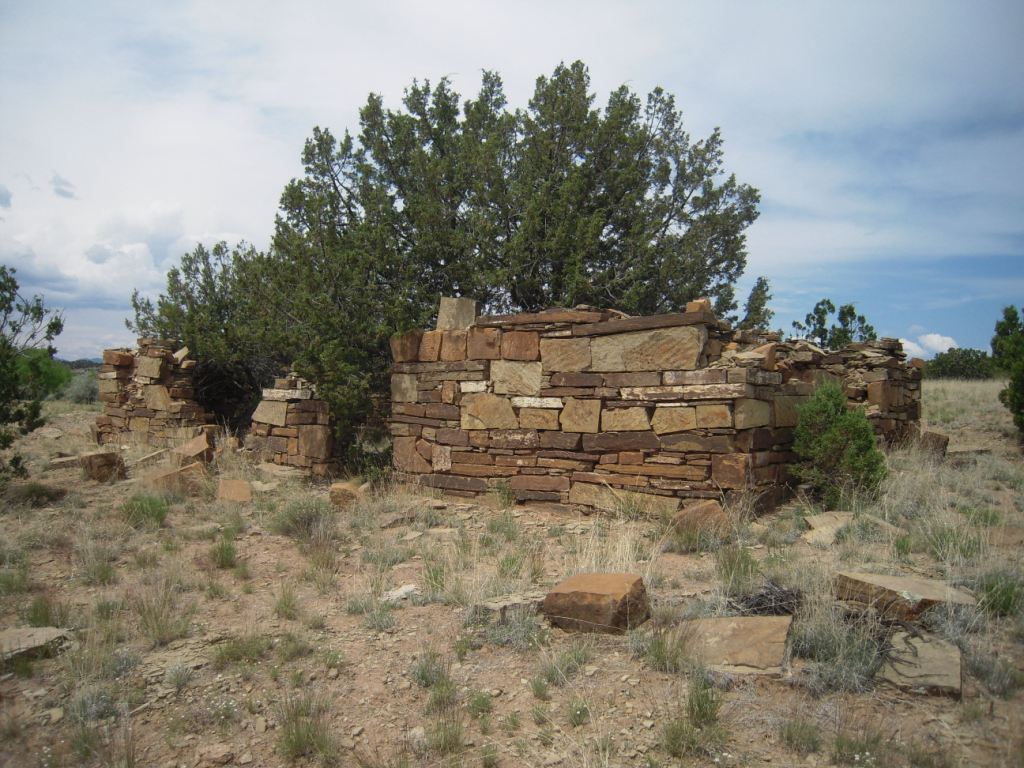
I spent an enjoyable and informative day last week exploring Alamocita Creek, guided by Bob Roland (“The Ballad of Placida Romero,” New Mexico Historical Review, Summer 2011). Bob showed me the graves of the two sheep ranchers killed by Nana’s raiders on the Alamocita sometime around August 5 or 6, as well as the site he identifies as “Camp French.” According to Roland, this was the location Lt. Wright was referring to when he advised Col. Hatch that “Captain Parker is at Alamosa” (Chapter 4). To my untrained eye the remaining stonework looks substantially different from any other ruins we looked at in the area and is very similar to the fieldstone construction I’ve seen at Western forts from that period. This may well have been where Parker’s half company was based in his sweep along the Rio Salado. A number of men working together certainly put considerable sweat equity into the buildings, directed by someone with the eye for precision, order and straight lines typical of the military mind. Seems to have been a lot of work for what could have been no more than an occasionally occupied outpost, but I can envision an officer like Parker planning the project, with a tough First Sergeant like Thomas Shaw to keep the men at it in the hot sun.

A house built by slaves?

This is a trivial thing, but I do get tired of the way people feel free to distort and rewrite history to fit their particular political narrative. Michelle Obama tells graduates she “wakes up in a house built by slaves.” That’s BS. In fact the building we now call the White House was built by skilled Scottish stonemasons, burned down in 1814 and rebuilt and remodeled repeatedly over the next 150 years, always by paid workmen. Here’s a short history lesson for anyone interested in the actual facts.

None of this is secret or even arcane information. There’s certainly some poor wretch someplace in the bowels of the federal gov’t who is familiar with the history of the Executive Mansion. I assume that FLOTUS has a highly-paid cortege of speechwriters to prep her public remarks, and they are in turn backed by competent researchers and fact-checkers.  Apparently she and they are all indifferent to historical reality and cynically confident that no one in her audience (either the college grads she’s addressing or the reporters who are listening in) knows or cares more than she does.

Fire in the San Mateos

The North Fire is burning about 7,600 acres in the San Mateos, 25 miles SW of Magdalena. According to the Cibola Nat’l Forest news release the fire is “moving down ridge lines” in Water Canyon, on the southern edge of the Withington Wilderness, heading east.  Lightning caused, which is good (man-made forest fires somehow make me feel personally guilty, even though I’m always careful to drown and bury my own campfires) and the Forest Svc. is quite properly allowing it to burn while monitoring its progress to keep it from getting out of control. Wildfires make for healthy forests, but I still hate to see them burn.


Out of luck update

According to the Journal, on Saturday hikers discovered all that’s mortal of 59-year-old Stephen “Otter” Olshansky, reported missing in November,  in “a facility” at Lower Lagunitas Campground east of Chama. I’m guessing the “facility” was a FS pit toilet; not the place I’d pick to shuffle off my mortal coil, but as Stewart Brand (or somebody; I haven’t been able to track down the exact quote) said, “Few of us are given the opportunity to depart this life with grace and style, and most of those blow it.”

If it sounds as though I’m making light of the man’s passing, I’m not.  But there are worse ways to go than hypothermia, and far worse places to meet your maker than high in the mountains. It’s yet another reminder that hiking and camping alone is dangerous business.