Iron Mike

There’s no monument to Jumpin’ Jim I know of. Instead there’s a larger than life size statue in front of Post HQ. Formally titled “The Airborne Trooper” but popularly known as “Iron Mike,” a military slang applied to men who are especially tough, brave, and inspiring. Hearing Gavin’s story and the stories of the men who served with him would have far more positive impact on the average 18-year old recruit than hours of Powerpoint on the “The True Meaning of Liberty” as narrated by some boston college professor.

“Tough times create strong men, strong men create easy times. Easy times create weak men, weak men create tough times.” We need a generation of Iron Mikes,

We need heroes

While other bases are being renamed for Black soldiers, U.S. presidents and “Trailblazing Women”, Bragg is the only post not renamed after a person. The new name was chosen because “liberty remains the greatest American value,” according to one commission member. (Or could be the candidate pool? American combat deaths in World War II: 16 American Women, 708 African American Men, 406,576 White American Men.)

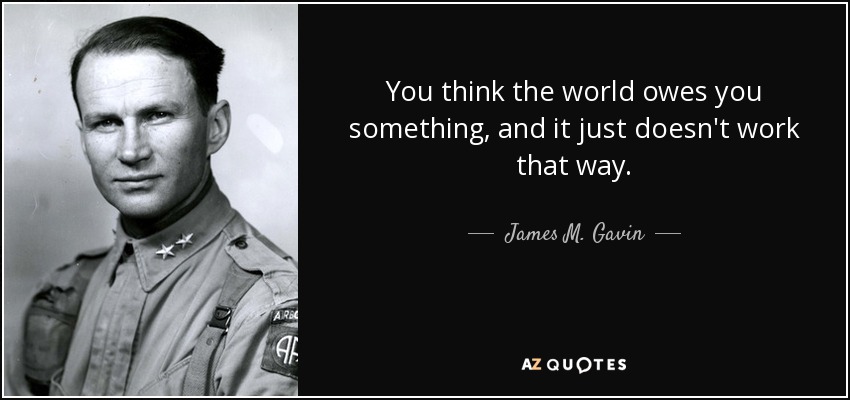
If we might waive the melanin and genitalia rule for the home of the “All American” 82d Airborne, I can suggest no better candidate than Lieutenant General James M. “Jumpin’ Jim” Gavin. Hard to find any traces of White Privilege in his career. Born in a Brooklyn tenement and orphaned at age two, at 9 he was adopted by a coal miner and his wife. At 12 he quit school to work full time to support his foster family, but continued to read every book he could find in his spare time.

He joined the Army at 17, he studied nights and weekends to pass a competitive exam for admission to West Point. As a cadet he got up every morning before reveille to catch up on the required reading and graduated 185th out of a class of 299.

By 1939 he was back at the Point studying the new German Blitzkrieg tactics. Of these the most dramatic was the use of paratroopers. Several other nations were experimenting with the concept, but their focus was on small scale guerrilla raids and harassing tactics. Gavin’s vision was of airborne armies as a major component of a combined arms assault. His first task was writing FM 31-30: Tactics and Technique of Air-Borne Troops. Later, when asked what made his career take off so fast, he would answer, “I wrote the book,”

In 1942 he joined the 82d as commander of one of the division’s parachute regiments. He led his troops on long marches and realistic training sessions, creating the traini’ng missions himself and leading the marches personally. He also placed great value on having his officers “the first out of the airplane door and the last in the chow line.”

His first combat jump was into Sicily, True to his word, he was the first man out the door. He suffered a sprained ankle but pressed on with the fight. His second combat jump was Salerno; his third a night drop into Normandy on D-Day. As 82d commander he led his men into Montgomery’s Market Garden assault on the Bridge Too Far. He suffered two fractured discs on that landing but went on fighting.

The “All Americans” next big fight was in the largest and bloodiest single battle fought by the United States in World War II. On 21–22 December 1944, the 82nd Airborne faced counterattacks from two Waffen SS divisions which included the 1st SS Panzer Division Leibstandarte SS Adolf Hitler and the 9th SS Panzer Division Hohenstaufen. The Waffen SS efforts to relieve Kampfgruppe Peiper failed due to the stubborn defense of the 82nd Airborne, the 30th ID, 2nd ID, and other units.

That spring he and his men drove toward the Rhine, collecting hundreds of thousands of prisoners along the way. He ended the war a 37-year old Lt. General.

.

lonesome traveler

Well I’m just a lonesome traveler, a great historical bum
Highly educated, through history I have come
I built the Rock of Ages, it was in the year of One
And that’s about the biggest thing that man has ever done

I was born about ten thousand years ago*
There ain’t nothin’ in this world I don’t know
I saw Peter, Paul and Moses playing ring-around-the-roses
And I’ll whup the guy what says it isn’t so

I saw Adam and Eve a-driven from the door
I’m the guy that pick the fig leaves that they wore
And from behind the bushes peeping, saw the apple they were eating
And I’ll swear that I’m the one that et the core

Now, I built the Garden of Eden, it was in the year of Two
Joined the Apple Pickers Union, and I always paid my due
I’m the man that signed the contract to raise the Rising Sun
And that’s about the biggest thing that man has ever done

I taught Samson how to use his mighty hand
I showed Columbus to this happy land
And for Pharaoh’s little kiddies I built all the pyramiddies
And to the Sahara carried all the sand

I was straw boss on the pyramids, and the Tower of Babel too
I opened up the ocean, let the migrant children through
I fought a million battles and I never lost a one
And that’s about the biggest thing that man has ever done

I taught Solomon his little A-B-C’s
I’m the first one that ate Limburger cheese
And while floating down the bay with Methuselah one day
I saw his whiskers floating in the breeze

I fought the Revolution that set this country free
It was me and a couple of Indians that dumped the Boston tea
I won the battle of Valley Forge and the battle of Bully Run
And that’s about the biggest thing that men has ever done

Well, Queen Elizabeth, she fell in love with me
We were married in Milwaukee secretly
But I got tired and shook her and ran off with General Hooker
To go shooting skeeters down in Tennessee


Viva Villa!

Certainly an unpopular and even dangerous thing to say today down on the Texas border, where they are reclaiming the bodies of two Americans killed by bandits in Matamoros. But by ironic coincidence March 9 marks the 107th anniversary of the predawn attack on the little town of Columbus, New Mexico, and the adjacent U.S cavalry Camp Furlong by the outlawed bandit and failed revolutionary Pancho Villa.

It’s not clear Villa himself was on the scene or directing the attack from otra de lado, just as there is some uncertainty over whether he was aiming for the 13th Cavalry’s stables and armories, the vault of the local bank (it was still standing forlorn in an empty lot the last time I visited), or the head of the town’s leading merchant, who had cheated the general on an arms deal.

Whatever Villa’s motives, the raid left 17 American soldiers and citizens dead. Public outrage forced revered professional intellectual and passive-aggressive pacifist President Woodrow Wilson to send the Army into Mexico to capture Villa “dead or alive.” If you’re interested in the details, I highly recommend The Great Pursuit.

America faces a much greater threat today from the murderous cartels that have controlled the border for more than a generation, reaping enormous profits from the traffic in illegal immigrants and illicit drugs. We’ve ignored that underlying problem in our endless arguments over immigration and border security, but it’s past time both governments confront the issue –hopefully with more success than Black Jack Pershing (hampered by a hostile Mexican government and a dithering Presidential administration) had in chasing Pancho Villa.

desiderata

You are a child of the universe, no less than the trees and the stars; you have a right to be here. And whether or not it is clear to you, no doubt the universe is unfolding as it should. Therefore be at peace with God, whatever you conceive Him to be, and whatever your labors and aspirations, in the noisy confusion of life keep peace with your soul.With all its sham, drudgery, and broken dreams, it is still a beautiful world. Be cheerful. Strive to be happy.

Max Ehrmann, Desiderata, Copyright 1952.

Jed Smith

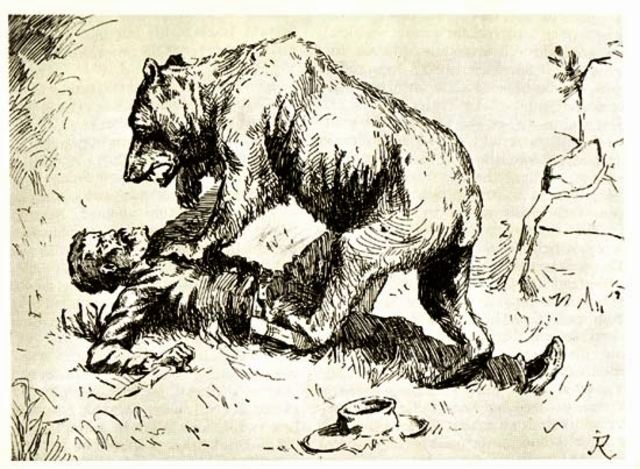
Another man in Nana’s mold worth remembering: Jedediah Strong Smith. A devout Christian who carried his Bible and a good rifle wherever he ventured, Jed was a double-tough mountain man who fought a wounded grizzly until his comrades arrived to drive the bear off and then calmly directed one of them in piecing back together and sewing up his torn face, scalp and ear. He survived and went on to discover the South Pass, opening the Oregon Trail to the Pacific Northwest. He next led a party of fellow trappers from the Salt Lake down through today’s Utah and across the Mojave to sunny southern California, becoming the first white man to cross that desolate terrain, and then brought the survivors back across the Sierra Nevada, through the Great Basin and back to Missouri. From there he adventured southwest along the new Santa Fe Trail. His luck finally ran out somewhere in today’s southwest Kansas when a party of marauding Comanches spooked his horse and overwhelmed him — but not before he killed three of them. That was 190 years ago today, on May 27, 1831.

.

“die like a hero going home.”

“Prepare a noble death song for the day when you go over the great divide.
When it comes your time to die, be not like those whose hearts are filled with the fear of death, so that when their time comes they weep and pray for a little more time to live their lives over again in a different way. Sing your death song and die like a hero going home.”
~ Tecumseh

Another very tough old man

My obsession with historic monuments and their cultural significance sidetracked my last post, which turned into a defense of the “Minuteman” statue. But what I set out to do on the anniversary of the opening clashes of the American Revolution was to recall the story of yet another old man in the mold of Nana.

Sam Whittemore fought for the crown in King George’s War (1744-48) and the later French and Indian War (1754-63). He retired a captain of dragoons and settled on a farm in Massachusetts to enjoy his golden years.

He was 80 years old when the King’s men showed up in his dooryard. Humiliated by their repulse at Concord and infuriated by the sniping that was thinning their ranks as they retreated to Boston, the redcoats revenged themselves on the countryside as they went, burning and plundering farms along the line of march and shooting suspected rebels on the spot.

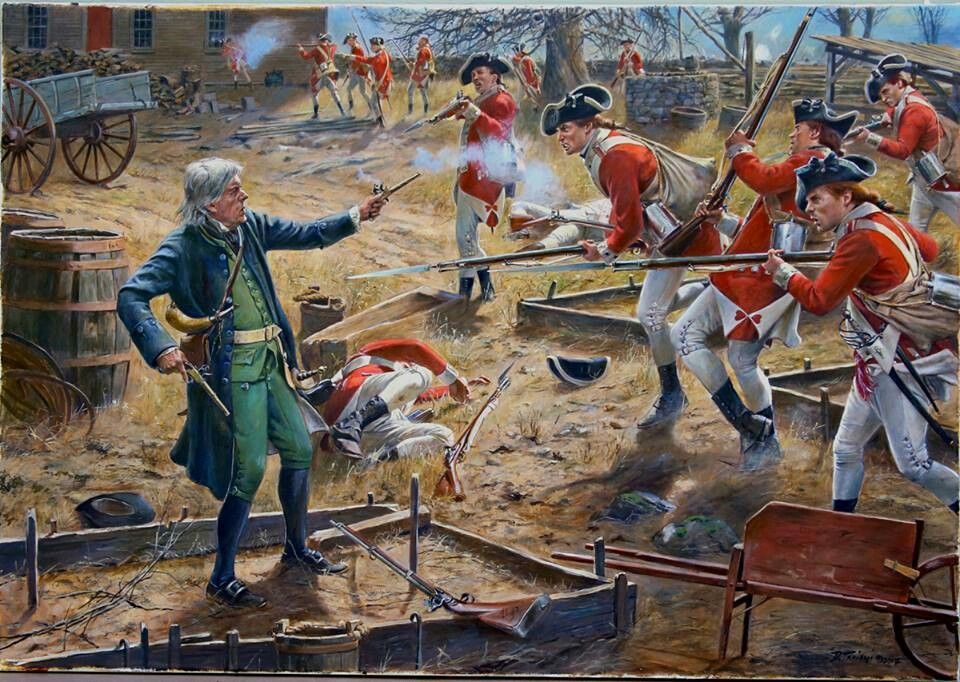
Although far too old to have any obligation to militia service, Captain Whittemore picked up his musket, added a brace of dueling pistols and a cutlass (a souvenir of his service against the French) and went out to contest these outrages. He took his stand behind a stone wall and opened fire on the King’s 47th Regiment of Foot.

He killed one soldier with his musket and then killed another and mortally wounded a third with his pistols as the grenadiers charged the ambush, then fended off their bayonets with his cutlass until shot in the face. As he struggled to regain his feet, the redcoats clubbed him down with their gun butts and bayoneted him on the ground. They left him for dead by the roadside, but when his neighbors came to collect the body they found the old man up on one knee, reloading his musket.

A local doctor could do no more than bandage the captain’s 13 stab wounds and the bullet wound to his head before sadly ordering him carried home so that he might die surrounded by his family. Instead, the tough old soldier recovered and lived another 18 years before dying at age 98. I’d love to see Clint Eastwood play him in the biopic.

“I have but one lamp…

Strange that a choleric Scots-English tobacco farmer could have anything in common with an Apache warrior. But I think Patrick Henry and Nana would have understood each other very well. Today marks the anniversary of Henry’s eloquent address to the Virginia legislature .

“I have but one lamp by which my feet are guided; and that is the lamp of experience. I know of no way of judging of the future but by the past,” Henry told the assembly.

“Our petitions have been slighted; our remonstrances have produced additional violence and insult; our supplications have been disregarded… If we wish to be free, if we mean to preserve inviolate those inestimable privileges for which we have been so long contending, if we mean not basely to abandon the noble struggle in which we have been so long engaged and which we have pledged ourselves never to abandon until the glorious object of our contest shall be obtained, we must fight! I repeat it, sir, we must fight!

“Is life so dear, or peace so sweet, as to be purchased at the price of chains and slavery? Forbid it, Almighty God! I know not what course others may take; but as for me, give me liberty or give me death!”