Thou must hasten therefore: not only because thou art every day nearer to death, but also because your intellect doth daily waste and decay. https://marcusaureliusmeditations.weebly.com/book-iii.html
hasten


Following the trail of one very tough old man through New Mexico’s back country
Thou must hasten therefore: not only because thou art every day nearer to death, but also because your intellect doth daily waste and decay. https://marcusaureliusmeditations.weebly.com/book-iii.html
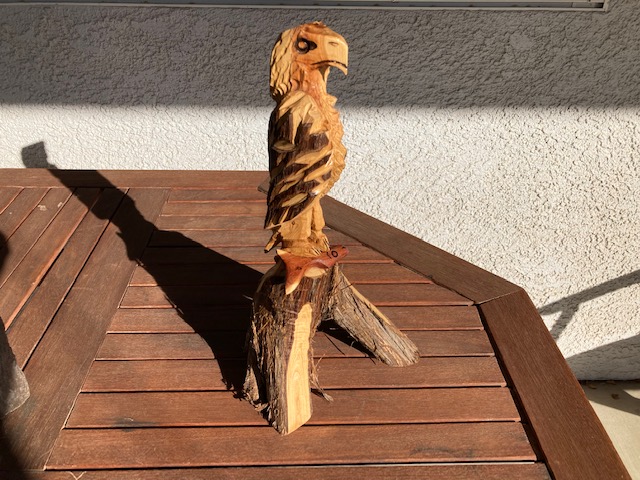
I bought this handsome bird this morning beside the road in Golden Valley. Local juniper, hand-carved by Scott “Doc” Lee. He picked up the nickname more than half a century ago, doing a two-year tour as an Army Medic at Tripler Medical Center, the huge military hospital overlooking Honolulu they call “The Big Pink.”
Hard to think of an MoS scarier (or more respected by the 11 Bravos carrying the fight) than 68 Whiskey, Combat Medical Specialist. When somebody gets hurt, you’re the guy who has to go out in harm’s way to get him, render first aid and bring him back. Takes a level of courage I’m pretty sure I just don’t have.
During 1969-’71, the two years Lee was posted there, Tripler was the busiest military hospital on the Pacific Rim. Of the more than 300,000 American Wounded In Action in Vietnam, 153,372 required hospitalization. As a percentage of total casualties, amputations and crippling wounds were 300 percent higher than in WWII and 70% higher than Korea. Only those who required advanced treatment not available in Vietnam got sent out of country. Most of those most seriously injured passed through the Big Pink, or ended their journeys there, in the pink coral hospital overlooking Honolulu.
And every month a levy came down from the Pentagon, listing the number of each MoS each command was required to transfer to the combat zone. So Doc spent his time in Hawaii — any American boy’s dream duty station — but Cam Ranh Bay was always just over the horizon, and he spent his days helping to treat some of the most horrifically injured boys coming back from there.
Now he lives in a battered old RV, still dressed in old camo fatigues, carving wood figures and selling them by the highway. Just another ‘Nam casualty, left behind when all the rest of us Boomers moved on to the new beat of disco music.
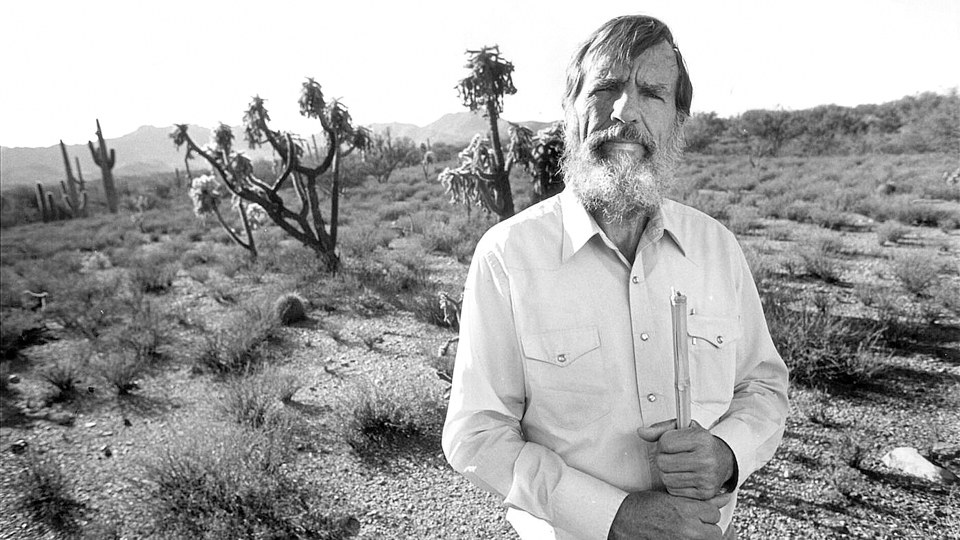
“May God’s dog serenade your campfire, may the rattlesnake and screech owl amuse your reverie, may the Great Sun dazzle your eyes by day and the Great Bear watch over you by night,” Edward Abbey (January 29, 1927 – March 14, 1989) wrote in Beyond the Wall. I just finished his last book, The Fool’s Progress: An Honest Novel. Not autobiographical, but confessional. He was scheduled for a book signing in Albuquerque but died before he made it, so I never met him. His friends wrapped him in an old sleeping bag and buried him out at the end of some lonely desert road in the Arizona back country. A stone near his grave is carved with his last words: “No Comment”
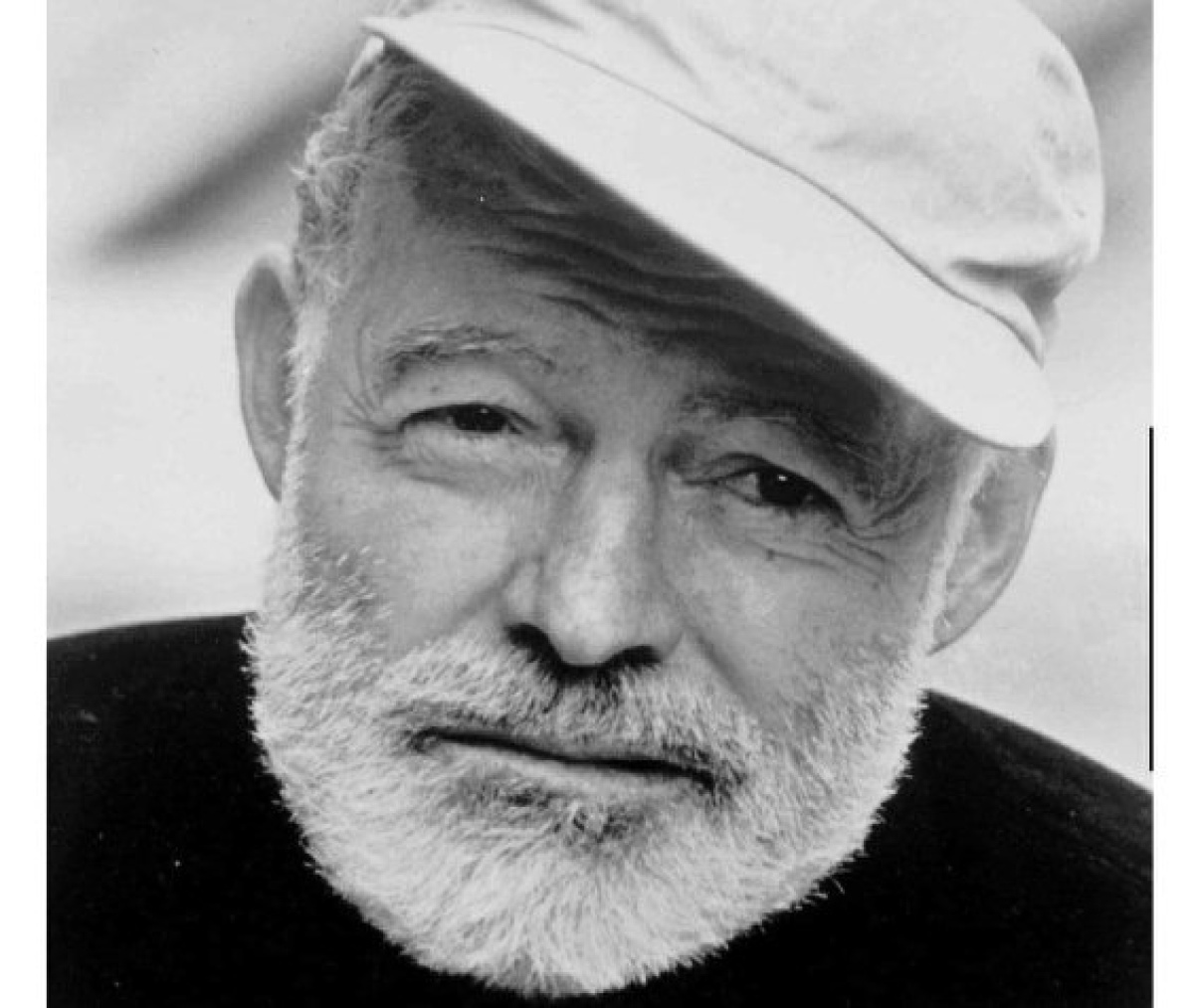
I once interviewed his English teacher in Oak Park. The old man really didn’t remember the kid at all but wanted to help out for some special anniversary piece, so I coached him through a couple usable quotes. Hemingway (July 21, 1899 – July 2, 1961) was certainly dead by then. His last days make interesting reading.
There’s a monument just north of Sun Valley inscribed on the base with an eulogy Papa wrote for a friend several decades earlier:[166]
Best of all he loved the fall
the leaves yellow on cottonwoods
leaves floating on trout streams
and above the hills
the high blue windless skies
…Now he will be a part of them forever.
He really reminds me of an old friend back in Santa Fe who has grown more handsome with age. Hi Bruce!

One evening as the sun went down
And the jungle fires were burning,
Down the track came a hobo hiking,
And he said, “Boys, I’m not turning
I’m headed for a land that’s far away
Besides the crystal fountains
So come with me, we’ll go and see
Here’s one for the vets among us, courtesy W.H.Auden
Over the heather the wet wind blows,
I’ve lice in my tunic and a cold in my nose.
The rain comes pattering out of the sky,
I’m a Wall soldier, I don’t know why.
The mist creeps over the hard grey stone,
My girl’s in Tungria; I sleep alone.
Aulus goes hanging around her place,
I don’t like his manners, I don’t like his face.
Piso’s a Christian, he worships a fish;
There’d be no kissing if he had his wish.
She gave me a ring but I diced it away;
I want my girl and I want my pay.
When I’m a veteran with only one eye
I shall do nothing but look at the sky.
–W.H.Auden
Revisiting an old book I haven’t read in 50 years, John Steinbeck’s “Travels With Charley” and discovering insights I missed as a young man that resonate with me today. Steinbeck was just 58 when he embarked on one last cross-country road trip, but he already had one foot in the grave.
As it turned out, he had years yet to live. But I believe the progress of congenital heart disease left him more worried about a long decline as an invalid.
“It had happened to so many of my friends. The lecture ends, ‘Slow down. You’re not as young as you once were.’ And I had seen so many begin to pack their lives in cotton wool, smother their impulses, hood their passions, and gradually retire from their manhood into a kind of spiritual and physical semi-invalidism. In this they were encouraged by wives and relatives, and it’s such a sweet trap.
“Who doesn’t like to be a center for concern? A kind of second childhood falls on so many men. … I see too many men delay their exits with a sickly, slow reluctance to leave the stage. It’s bad theater as well as bad living.”

One of the most intriguing collateral effects of the ongoing drought has been the emergence of “ghost boats” on the beds of drying reservoirs. Most, like the one in a previous post, are pleasure craft and it’s easy to imagine how they came to sink beneath the waves of Lake Mead or Powell. But the hulk recently discovered on the dried mud of Lake Shasta in northern California has a more curious provenance. It was a WWII Landing Craft, Vehicle, Personnel (LCVP) more commonly known as a Higgins Boat for its designer and builder, Andrew Jackson Higgins. Just 36 feet long and 10 feet wide, these little boats could carry three dozen soldiers (or Marines) and its shallow draught and front ramp made it possible to drop them directly on the beach. The design made not just the Normandy D-Day landing but MacArthur’s island-hopping Pacific campaign possible. The numbers on the Lake Shasta wreck identify it as one assigned to the USS Monrovia, which earned battle stars in both the Atlantic and Pacific, so the Lake Shasta boat may well be a veteran of Sicily, Tarawa, Kwajalein and Saipan. Higgins produced nearly 24,000 of his boats but few survived the war. The Lake Shasta boat was probably sold as war surplus and intended for use as a tour boat. Higgins himself died of stomach ulcers in 1952 at age 65.

Like overpopulation, drought is one of those crises that sneak up on you. Earthquakes, wildfires, pandemics announce their arrival like comets in the sky and are all but impossible to ignore or disparage. But when you live somewhere like Albuquerque, which averages less than 10 inches of precipitation a year, or Las Vegas, which gets just four inches on average, it takes a while to notice that it’s just not raining at all. And so we’re just now waking up to the sad fact that the Southwest is 20 years into a historic dry spell.
It’s not as though we haven’t been warned. In Lake Mead and Lake Powell we have pluviometers large enough to be visible from space. And year by year we’ve been able to see the ugly bathtub ring around these giant reservoirs inexorably widening as the water level drops. Now, the gauge is dropping from critical to catastrophic. Lake Mead is at just 28 percent of capacity and Lake Powell at 27 percent, the lowest levels since the dams were completed that created those lakes.
That’s grim news not just for the 40 million people who depend on the Colorado River for their drinking water but for all 330 million of us. Three-quarters of the river’s water irrigates crops, including California’s Central Valley, the source of a quarter of the nation’s vegetables.

Whether the Southwest is in the worst drought in a generation, a century or a millenium, it’s no surprise that we’re also in the worst fire season in at least a decade. The National Interagency Fire Center has the dismal numbers as well as an interactive map. So far this year 29,827 wildfires have burned 2,7 million acres, well above the 10-year average of 23,070 fires over 1.1 million acres.
The photo is by the Albuquerque Journal’s Eddie Moore, part of that paper’s photo coverage of the devastating Hermits Peak/Calf Canyon blaze. New Mexico’s largest recorded wildfire, that conflagration has charred more than 325,000 acres since April 6 and is still only 70% contained.
While Calf Canyon is attributed to a pile burn “sleeper” or “holdover” fire that smouldered under the snow since January, Hermits Peak was a Forest Service prescribed burn that was blown out of control by unexpected high winds. But ultimately both these fires and the others burning across the West can be blamed on decades of misguided forestry.
It’s ironic (and perhaps prophetic) that the FS is flying the “Pride Flag” this month, since the rainbow banner doesn’t just celebrate diversity but also recalls the divine promise in an old spiritual:
God gave Moses the rainbow sign
No more water, but fire next time
 Tracking Nana