lonesome traveler

Well I’m just a lonesome traveler, a great historical bum
Highly educated, through history I have come
I built the Rock of Ages, it was in the year of One
And that’s about the biggest thing that man has ever done

I was born about ten thousand years ago*
There ain’t nothin’ in this world I don’t know
I saw Peter, Paul and Moses playing ring-around-the-roses
And I’ll whup the guy what says it isn’t so

I saw Adam and Eve a-driven from the door
I’m the guy that pick the fig leaves that they wore
And from behind the bushes peeping, saw the apple they were eating
And I’ll swear that I’m the one that et the core

Now, I built the Garden of Eden, it was in the year of Two
Joined the Apple Pickers Union, and I always paid my due
I’m the man that signed the contract to raise the Rising Sun
And that’s about the biggest thing that man has ever done

I taught Samson how to use his mighty hand
I showed Columbus to this happy land
And for Pharaoh’s little kiddies I built all the pyramiddies
And to the Sahara carried all the sand

I was straw boss on the pyramids, and the Tower of Babel too
I opened up the ocean, let the migrant children through
I fought a million battles and I never lost a one
And that’s about the biggest thing that man has ever done

I taught Solomon his little A-B-C’s
I’m the first one that ate Limburger cheese
And while floating down the bay with Methuselah one day
I saw his whiskers floating in the breeze

I fought the Revolution that set this country free
It was me and a couple of Indians that dumped the Boston tea
I won the battle of Valley Forge and the battle of Bully Run
And that’s about the biggest thing that men has ever done

Well, Queen Elizabeth, she fell in love with me
We were married in Milwaukee secretly
But I got tired and shook her and ran off with General Hooker
To go shooting skeeters down in Tennessee


Fortune

This is the posture of fortune’s slave:

One foot in the gravy, one foot in the grave

All men should strive

To learn before they die

What they are running from.

And to, and why

James Thurber

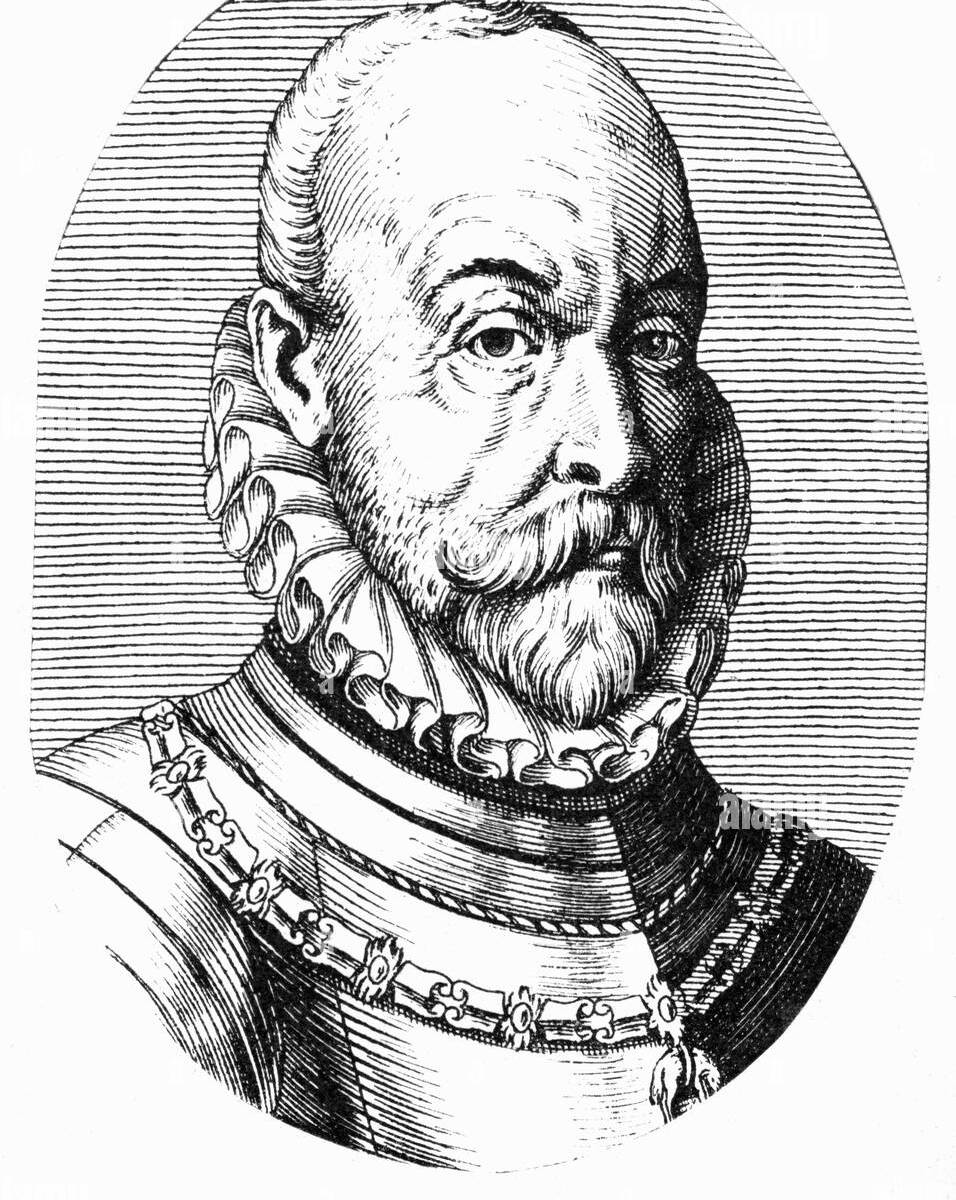
The Death of Von Mansfeld

“The courage, endurance and self-discipline for which he was famous were balanced by no social virtues and he was as devoid of common honesty as he was of cowardice. …What his destination was on that last journey, or what his projects, no one knew. … Mystery and legend surround his last days, but somewhere on the way to the Dalmatian coast among the hills above Sarajevo, he died, leaving his leaderless companions to starvation or captivity. It was rumored untruthfully that the Turks had poisoned him, rumoured too, perhaps with more truth, that when his body and soul were in their last struggle, he called for two of his men and, leaning a heavy arm on the shoulder of each, dragged himself to his feet so that he should die at least as befitted a soldier and the son of a noble house — a defiant and futile gesture to end that defiant and futile life.” Wedgwood, The Thirty Years War.

A Contrarian View of the Little Bighorn

I’ve been re-reading P.T. Tucker’s Death at the Little Bighorn, which challenges the popular consensus on the grand finale of that most iconic fight. I find myself persuaded by the psychology underlying Tucker’s thesis rather than the facts he advances in support. The argument revolves around the events in the dry gulch known as Medicine Tail Coulee on the fateful afternoon of June 25, 1876.

Certain facts can be considered settled. Soon after he crossed into the valley of the Little Big Horn, Custer divided his 12 companies into four elements. He sent three companies under Captain Benteen to the left to sweep the broken country upstream in search of other possible Indian encampments — a precaution he had failed to take on the Washita 8 years’ before. He left one company behind with the slow moving mule pack train. He gave Major Reno three companies with orders to cross the river in pursuit of Indians glimpsed fleeing some miles ahead of the main column. The regiment’s Arickaree scouts rode with Reno, aiming at the huge horse herd west of the village.

Custer and his headquarters staff led the largest force of five companies north along the bluffs on the east side of the river, obviously intending to cross further downstream. either into or above the huge village to the west. Most historians I have read (and I’ve only read a handful in an incredibly prolific field) believe he aimed to round up enough of the fleeing women and children to use as hostages, forcing the warriors to draw off and negotiate a surrender.

Custer himself never said, so far as I know. He “followed the model of Napoleon, telling his subordinates as little as possible about his intentions.” In his final officers’ call he defended declining cavalry reinforcements and leaving behind the wheeled Gatling guns. He warned that they might face as many as 1,500 warriors. but declared the 7th could whip them unassisted. Nobody in the little group gathered in his tent had the temerity to ask “How?”

.

Le Beau Sabreur

Destroying Black Kettle’s village and capturing women and children had certainly worked for Custer on the Washita, and that objective had been explicit in Sheridan’s marching orders on that campaign. General Terry’s orders on this occasion were far more vague and lawyerly, but surprise attacks on Indian villages was the standard operating procedure in the Plains Wars. The Army justified the tactic on the grounds that the rascally redskins wouldn’t stand and fight, leaving the destruction of their villages as the only option if the tribes were to be subdued.

But hiding behind non-combatant hostages to bring the warriors to terms conflicted with Custer’s image of himself as le beau sabreur, a dashing, fearless adventurer in the Napoleonic mold of Lasalle and Davydov. For those bold horsemen the only true role of the cavalry was to attack no matter what the odds, overwhelming the enemy in a sabre-to-sabre l’attaque a outrance.

“L’audace, encore de l’audace, toujours l’audace,” was the motto embraced by these daring cavalrymen, and it had carried Custer to his greatest victories in the Civil War. Given that mindset, I would suggest his plan as he moved up the east side of the river was to launch a flank attack aimed not at the fleeing villagers but falling on the rear of the mass of warriors engaging Reno. His five companies would be the hammer, Reno’s three companies the anvil that would crush the Sioux and Cheyenne braves between them, with Benteen coming up in time to mop up the fleeing survivors.

A complete victory over this huge assembly of their greatest warriors in the open field would finally convince the tribes that resistance was futile. Custer aimed to end the Great Sioux War in one afternoon.

Custer’s Luck

Unfortunately, by the time Custer reached the head of Medicine Tail Coulee, Reno’s charge had dissolved into a disorderly retreat back over the river. The rapid and complete collapse of Reno’s battalion freed hundreds of warriors to stream back north, wild with the exultation of victory and eager to confront the new threat developing to their rear.

If he were to survive the day with scalp and reputation intact, Custer needed to regain the initiative, and few good choices lay before him. He could turn on his heel and ride back south over the bluffs that were getting thick with hostiles. He would take casualties, but five companies of heavy cavalry formed in a disciplined body were sure to break through to Reno’s position. Gathering in Benteen’s battalion and the vital packtrain and establishing a defensive perimeter, the regiment would survive until Terry relieved them. Recriminations and court-martials would follow, but Custer’s reputation would survive more or less intact. He would argue that the plan would have worked if Reno hadn’t been an incompetent, cowardly drunk.

But he would have lost the battle and Sitting Bull won. Custer’s Luck was proverbial not just within the Army but with his adoring public. He never lost.

The Narrative

According to the reconstruction that seems to best match the archeological record, Custer dispatched two companies down Medicine Tail Coulee with orders to feint at crossing the ford there, presumably to reduce the pressure on Reno by drawing more warriors north to protect their village. At the same time Custer moved north with the main body to higher ground on what later became known as Calhoun Hill, where the three companies dismounted and deployed skirmish lines to defend against mounting hostile pressure. They remained there for some time, apparently waiting the arrival of Benteen’s battalion and the reserve ammunition packs. When the two companies rejoined the main body after their demonstration at the Medicine Tail ford, Custer himself led one or both farther north looking for another ford downstream. By the time he returned from that reconnaissance, the situation of the stationary companies was rapidly deteriorating as more than a thousand Indians closed on the 210 defenders from the east, south and west of their position. Gradually at first and then very suddenly the companies collapsed like dominoes, the survivors retreating to their final position on Last Stand Hill.

Taken together those decisions make no sense. Recognizing that Reno was in trouble, a prudent commander might have ridden south to regroup and concentrate his force. An aggressive commander, intent on regaining the initiative by seizing enough hostages to force an end to the fight, would have continued north in pursuit of the fleeing villagers. In neither case would he have sat still, burning daylight as the fugitives got farther and farther away and the warriors gathered on his flanks.

The strength of cavalry is in its ability to move fast, maneuver quickly and strike hard. A static cavalry troop was no more than an under-strength infantry company burdened by a herd of nervous horses. No man knew that better than George Armstrong Custer.

The Fight at Medicine Tail Ford

As a cavalry commander, George Armstrong Custer was active, impatient and aggressive past the point of recklessness. It’s impossible to imagine him sitting on a hill waiting for a lagging subordinate as his tactical position steadily deteriorated, the villagers drawing away to the north while the warriors closed from the south. Why the prolonged and ultimately fatal pause on Calhoun Hill? Perhaps the answer lies at the Medicine Tail Coulee ford.

The last glimpse Trooper Giovanni Martini, bearer of Custer’s famous last message, had of his commander was as Custer led his five companies down into Medicine Tail Coulee, headed west toward the Bighorn River. Martini had no doubt his colonel was on the front foot, leading a full-out assault on the Indian village beyond. Tactically, it was the best option Custer had. The broad and shallow ford at Medicine Tail Coulee was the key terrain feature on the battlefield. It was the best crossing for miles in either direction, where the stream was bounded by steep bluffs and high cut-banks that made a swift and organized crossing impossible.

Reno’s “anvil” had dissolved but Custer could still strike a hard blow with his hammer. Charging into the heart of the village would put him between the warriors coming up from the south, their horse herd to the west and their families fleeing to the north. As a Marine very much in the Custer mold once said, “We’re surrounded. That makes it simpler. They can’t get away from us now.” And in any given situation, Custer’s first instinct was to attack, He had won his greatest victory by a headlong charge against odds, leading his 400 Wolverines against Jeb Stuart’s cavalry brigade. More than half the 400 were killed, wounded or unhorsed that day, but they cost Lee the battle of Gettysburg.

Benteen, Reno and others who walked or rode the ground after the battle shared the view that Custer had charged the ford but been repulsed, although there were few dead horses and no bodies at the crossing. Later Indian testimony varied in detail but agreed that a small force of Cheyenne and Sioux warriors held the ford against the soldiers. Several accounts described a white man in a buckskin jacket who was hit and escorted off the field by his companions, after which the whites had retreated in some confusion, dismounted, remounted and finally left the field..

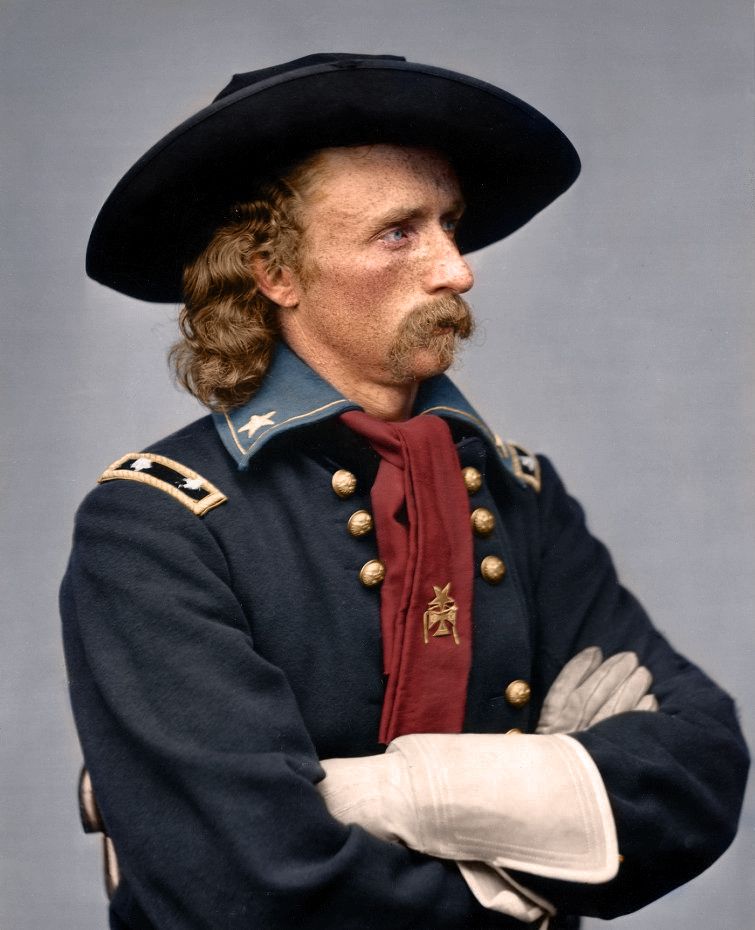
Taylor argues the man in the buckskin jacket was George Armstrong Custer. In his distinctive light-colored buckskin jacket, wide-brimmed white hat and trademark red scarf, he would have been a natural target for the handful of Indians defending the ford, some of whom carried Winchester and Henry repeaters.

“A showy uniform for Custer was one of command presence on the battlefield: he wanted to be readily distinguishable at first glance from all other soldiers. He intended to lead from the front, and to him it was a crucial issue of unit morale that his men be able to look up in the middle of a charge, or at any other time on the battlefield, and instantly see him leading the way into danger.” according to Tom Carhart,

The downside of embodying the unit’s elan in one charismatic leader is if that individual falls, morale collapses with him. (One example is the death of the invulnerable Cheyenne war chief Roman Nose at Beecher Island in 1868.) That would explain the paucity of evidence of a serious clash at the ford. If Custer had been hit in the first volley from the defenders on the opposite bank, the charge across the stream would have lost momentum at the outset. Exhausted horses, half crazed with thirst and suddenly checked at the bank of the stream would have added to the confusion.

As senior officer, Captain Keogh would would have assumed command if Custer were incapacitated, although he likely would have faced a challenge to his authority from Tom Custer, who was serving as his brother’s aide-de-camp. Rash as his brother, Tom might have argued for reforming the ranks and resuming the charge. If so, Keogh over-ruled him and led all five companies north to the high ground at Calhoun Hill. The two wings took separate routes away from the river, leaving the impression only two companies had been involved in the brief fire fight at the ford.

While the surgeon treated Custer and the other wounded, Keogh might have dispatched one or two companies in a reconnaissance in force with orders to find and seize an undefended ford until he could come up with the main body. His goal at this point was not to capture villagers but to open an escape route that would enable him to join up with Terry, who was moving up the Bighorn from the north.

If that was his plan, it failed. With the recon force repulsed at the northern ford and more Indians pouring in from that direction, burdened by a growing number of wounded and hampered by the loss of an increasing number of horses, the five companies were pinned in place.