I really didn’t intend to let this blog detour off to Oregon, but must note that a local cowboy has joined the goat rodeo at Malheur. I don’t know the ranch, but seems he’s from Grant County, someplace down around Silver City. If I was still an ambitious and energetic reporter – and there are some good ones in that end of the state — I’d be looking to find more about him. I bet the local BLM or Forest Service guys and the county agent all know him well.
He doesn’t offer much of his story in his video, but if his allotment has really been cut from 600 AUM to 85, it’s no wonder he’s ready to throw in his contract. I sympathize with his plight, but don’t much favor his chances. We’re becoming an increasingly urban society, where rural values and lifestyles carry less and less weight. The West is changing again, as it has with each new generation; only the mountains endure forever. The ranchers, loggers and miners took the land away from the Indians with the help of the Army. Now, with the backing of the federal bureaucracy, the urban environmentalists are taking it away from them. Demographics, as always, is destiny.
Seems to me a rancher has just two arguments these days: hamburger and sentiment. I’m a big fan of hamburger, and I’m willing to share the land with beef on the hoof, but few city folk seem to make that connection anymore, or care. Where does all that cheap chicken come from and how does it get to your freezer? You don’t really want to know, and I believe the cattle business is already well along that road.
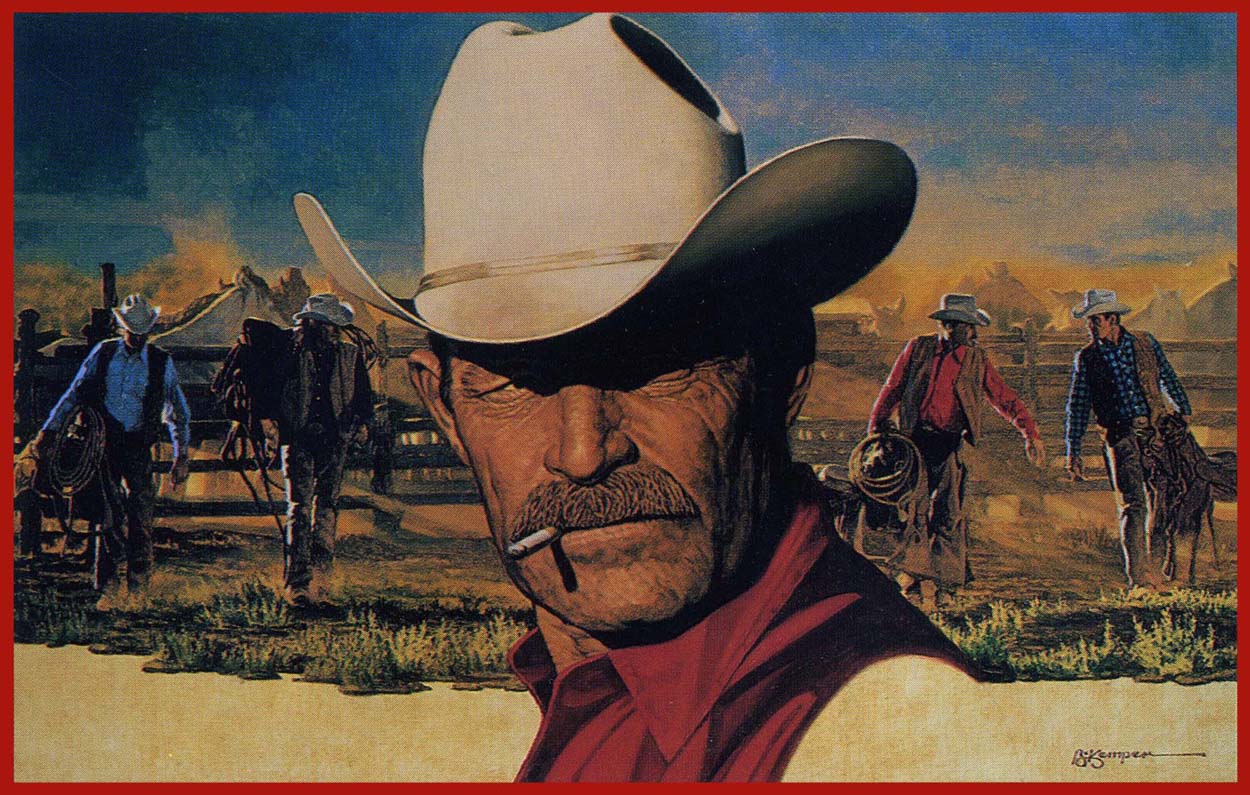
As far as sentiment goes, the wolves, coyotes, and prairie grouse seem to have it all on their side. As the generation that remembers Gene Autry, The Rifleman, Bonanza and the Marlboro Man fades away, saving the family ranch loses its resonance.
I don’t favor selling the public lands, although a new Homestead Act might be fun to watch. But I believe we could and should move management of the land in the West down to the state and county level, where rural voices can be better heard and accommodated. We’ll hear from the bunny-huggers as well, but here at home is where we need to have that debate.
The Malheur Misfortune
As I’ve been writing the final chapter of Tracking Nana I’ve been reading up on the Cibecue affray and at the same time following events at the aptly-named Malheur (“misfortune,” or “bad luck”) Wildlife Refuge in Oregon. There are depressing parallels, as with the Branch Davidians at Waco and both Wounded Knees, not to mention the anabasis of the Nez Percé. All unfolded in a fog of misinformation, confusion, mixed motives and hidden agendas, and none ended well.
Bundy and his posse appear to have painted themselves into a corner, and I suspect that if some now regret it, at least a few of them relish the role of Travis at the Alamo. I’m a little disappointed in old man Hammond – if I were a septuagenarian rancher who had spent his life feuding with the feds on the open range, I believe I would absolutely decline to spend my last years as the guest of the guvmint in an 8’x10’ cell. Maybe he figures it will save his family’s ranch for another generation, or believes he’ll get better health care in the joint than he can afford as a self-employed small businessman. Could be he’s just tired; I know I would be in his place.
The Paiutes too seem to have let their old resentment of the ranchers who swarmed their lands in the first place blind them to their common interest in reining in the federal bureaucracy. (If you think the ranchers are angry at the BLM, ask an Indian what he thinks of the BIA.)
I’m also surprised the confrontation has not sparked more expressions of support elsewhere in the West. There are plenty of ranchers right here in New Mexico who have their own beef (pun intended) with their federal overlords, and we need look no farther back than Reis Tijerina and the Tierra Amarilla Courthouse to find a local precedent for armed protest.
Now the Oregon governor’s impassioned demand for action (and more federal money) echoes the earlier angry voices of the governors of Kansas, Texas, Colorado, and the Territories whenever there was an Indian “uprising” in the latter half of the 19th Century.
Bundy’s wife has issued a call for donations (Lisa Bundy, P.O.B.1072, Emmett, ID 83617). I’m tempted to send her five bucks, with my advice for whatever it’s worth: agree to surrender to the county sheriff and plead guilty to misdemeanor counts of trespassing and vandalism, if in return the feds promise to impanel a grand jury and appoint an independent special prosecutor to investigate the whole mess. Since there are serious allegations of misconduct not just by federal agencies but by the U.S. Attorney in Eugene, that investigation should be undertaken by disinterested parties someplace out of state, perhaps as far away as Salt Lake.
If that grand jury decides to indict Bundy and his followers for terrorism or whatever, well, it’s better to be tried by twelve than carried by six. The Malheur protestors have successfully drawn nationwide attention not just to the injustice done to the Hammonds but to the broader question of federal mismanagement of our public lands. We don’t want these issues obscured by a cloud of gunsmoke. It’s time to stand down before somebody gets hurt.
Coyotes on the Missile Range
Today’s Journal picks up a Las Cruces Sun-News story by Steve Ramirez on the White Sands coyote invasion. Ramirez mentions Aguirre Springs, one of my favorite NM campgrounds, but offers no evidence there’s actually a coyote problem there. Too bad. When I’m out in the back country, I love hearing them sing.
Very few ranchers – or the suburbanites who’ve lost pets to them – share my affection for the critters, and the sentimentality that clouds the debate over predator control irritates me. There’s a billboard on I25 between Albuquerque and Santa Fe that urges “Stop the Killing Contests!” and WS authorities “emphasized that hunting or outside contests to shoot coyotes is prohibited.” Instead, predator control experts will set leg traps and “euthanize” the animals caught. I’m no coyote, but if I was I believe I’d prefer to get shot from ambush rather than caught in a trap, hauled off in some alien spaceship and strapped to a table to begin my journey “to that undiscovered country, from whose bourn no traveller returns.”
Riding the Rails 2
My Amtrak adventure from Albuquerque to Chicago and return (26 hours each way) gave me plenty of time to ponder our “fathers’ magic carpet made of steel.” Although he had doubtless heard stories of the iron horse, Nana never actually saw a steam locomotive until 1880 or ’81, when the A.T.&S.F and Southern Pacific lines reached into southwestern New Mexico from the north and west. The impact on the Chihene homeland was profound and immediate.
The economic effects of the Panic of 1873, like our own Great Recession, lingered for more than a decade; coupled with the increased mechanization of agriculture and the wave of new immigrants arriving from Europe, the weak economy left tens of thousands of working men unemployed or underemployed. For the boldest of those, the new railroads offered a fast and relatively inexpensive route to new opportunities in the West.
New Mexico’s population grew 30% between 1870 and 1880 and by another 34% between 1880 and 1890, and a great many of those new arrivals were drawn to the southwestern quadrant of the territory. According to Christiansen’s Story of Mining in New Mexico, “prospectors swarmed over every mountain and hill in search of silver. Spurred on by reports of successful mining at Chloride Flat and Georgetown, they combed every inch of accessible land, and many new prospects were uncovered.”
“The reports from our mining districts are so encouraging as to lead thousands of prospectors into the mountains from the North, South, East and West,” the Albuquerque Journal boasted in December, 1880. In all that bustle and activity, the ecological niche occupied by the free Apache for centuries disappeared almost overnight.
“When I first saw a railway train – A solid example of the white man’s magic – I began to see,” a Kiowa wrote years later.
Buried Alive
Albuquerque Journal offers a timely reminder of how quickly the weather can turn on you, especially in the West, with a story of two people ambushed by the weekend’s blizzard. One minute you’re delivering newspapers and then almost before you know it, you’re trapped in your car under 12 feet of snow. A timely reminder of how important it is to keep your cell phone charged. This happened near Clovis on the eastern plains, but the same sudden storm swept through the Gila country, dumping more than a foot of snow in the high country in a few hours. The San Francisco River Basin went from zero snowpack to 100 percent over the weekend, the Mimbres Basin from 2/3 normal to nearly double the average, Rio Hondo from 56 to 180 percent.
Riding the Rails 1
I’m halfway through a round trip to Chicago via Amtrak. (If that seems far afield from Nana’s odyssey, bear with me.) Since friends have inquired about train travel in 21st Century America, I want to share my impressions of the experience.
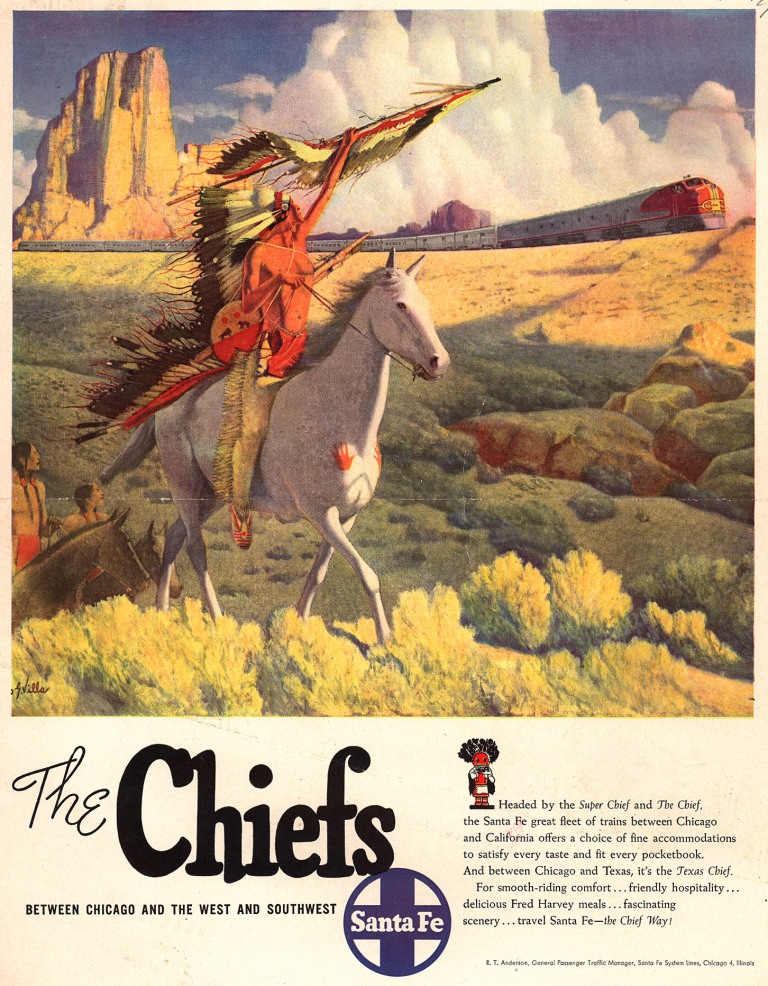
First, a little nostalgic background. Amtrak’s “Southwest Chief” is lineal descendant of the iconic A.T.&S.F. Super Chief, which ran between Chicago and L.A. from 1937 until 1971. The railroad painted the Super Chief’s diesels in a bold red and gold design, marketed it with eye-catching ads (wildly inappropriate by today’s standards), and promoted it as the glamorous “train of the stars.” In the years before air travel became both more comfortable and safer, the Super Chief whisked Hollywood’s elite from the coast to Chi-town in the lap of luxury, dining on gourmet meals and relaxing in spacious Pullman sleeping cars, sometimes reaching speeds of 100 m.p.h. as they made the 2,227 mile run in just under 40 hours.
But tempus fugit, as Virgil says. Don’t expect to meet Cary Grant and Doris Day, or even Paris Hilton, on today’s Amtrak. The food is decent, but no epicure’s delight, and the accommodations cramped. I’m 5’9”, still reasonably limber for my age, and no more than 10 (OK, maybe 15) lbs overweight, but I found our sleeping compartment a tight fit.
Worst drawback of the trip is the state of the track through NM, CO and KS. The swaying, bouncing and unpredictable lurching make navigating the narrow corridors an adventure. Passengers en route to the dining car find themselves reeling and staggering like drunken sailors on a choppy sea. The ride doesn’t smooth out until east of the Missouri.
But even with that, I have to say I enjoyed the experience. What’s it to do with the search for Nana? See Riding the Rails 2.
Cooney’s Tomb
For the past three months, my hunt for Nana has been sidetracked by what I’ve come to think of as the “Search for Cooney’s Tomb.” Not that the Tomb itself is at all difficult to find; it’s just three or four miles off pavement and so close to the road that a row of jersey bounce barricades have been placed to keep people from running into it. But I chose to make the journey the hard way, starting from TorC and driving up Cuchillo Creek to Winston and on over the Black Range to end of pavement at Beaverhead, and on from there skirting the northern edge of the Gila Wilderness. It had been my original intention to emerge through Mogollon, but that road was washed out when I made the trip at the tail end of the monsoon season. Instead, I detoured northwest to Apache Creek and then back down to Alma.
A long drive (it took me three days) but well worth it, as it reminded me just how beautiful – and empty – that country still is, and why Nana and his people fought so hard to keep it.
James Cooney and his brother Michael both died in those mountains, and some of their kin are buried there as well. Their story is the opposite side of the coin from Nana and his people. It wasn’t the soldiers who finally conquered Apacheria, although they played a valiant role in the contest. It was the Cooneys and thousands of others like them who took this land, literally crowding out the Indians. They came from the slums of the Eastern cities and poverty-stricken farms half a world away, drawn to the mountains by a dream: that with courage, hard work, and a little luck, “no longer I’ll be poor. Instead of digging praties, I’ll be digging lumps of gold.” Cooney’s Tomb is their monument.
SPOT for trouble
Today’s Albuquerque Journal reprints an interesting item touting the SPOT locator’s 4,000th wilderness rescue. My first thought was that I wouldn’t have believed that many adventurers needed rescuing. I’ve been wandering the mountains and deserts of the Southwest for more than 30 years, but never found myself so deep in the shit I couldn’t dig myself out, as the saying goes. But sure enough, the SPOT website chronicles thousands of instances over the past eight years, including some right here in New Mexico.
I’m not a gear junkie myself, either at home or in the woods, and in fact have tried to keep my Nana explorations as close to that period’s equipment and technology as possible. Instead of a horse or mule, I drive an old pickup, I use a good sleeping bag rather than a wool blanket, and I occasionally resort to a GPS when I’m wondering where the hell I am, but in general I eschew the conveniences that have become commonplace for the modern outdoorsperson since I was a boy.
That said, I have to admit the SPOT idea is attractive. I don’t get as deep in the back country as I once did, but it’s not unusual for me to wander a couple miles from my truck into remote areas well out of cell phone range. Since I generally hike alone, a sprained ankle, a snakebite, or any of a hundred other possible mishaps would leave me in a tight spot. For a hundred bucks a year, it seems like SPOT would offer some peace of mind, if not salvation. I may put it on my Christmas list.
The Right Side?
This post is a decided tangent for Tracking Nana, which is basically about investigating one particular incident in Southwestern history (and about exploring the New Mexico back country). But given my fascination with historic accuracy, it grates every time the President confidently assures me he’s on “the right side of history,” and I’d better get with the program because the “arc of history” is bending his way. These vaguely Marxist appeals to the inexorable march of human progress, coupled with the constant exhortations that Islam is a “religion of peace” make me suspect that either he doesn’t know any history himself or he’s cynically confident that, after 40 years of public education reform, his audience knows even less of the past than he does.
Since the Attorney General has warned us that we’re now officially entering the “if you can’t say anything nice, shut up” phase of the public debate regarding Muslims, I want to put my thoughts on The Ottomans out there before it becomes illegal.
Final thought: “Confusing what you think immediately, politically desirable with the Will of History, Evolution, or God is almost certainly an excuse to stop thinking altogether. … Beware anyone who imputes to History an inevitable, self-directed, Forward march, as if it were as fixed as a bar code, as predetermined as male-pattern baldness, as sovereign as any voluntaristic deity.”
The Red Queen’s Justice
My latest column.