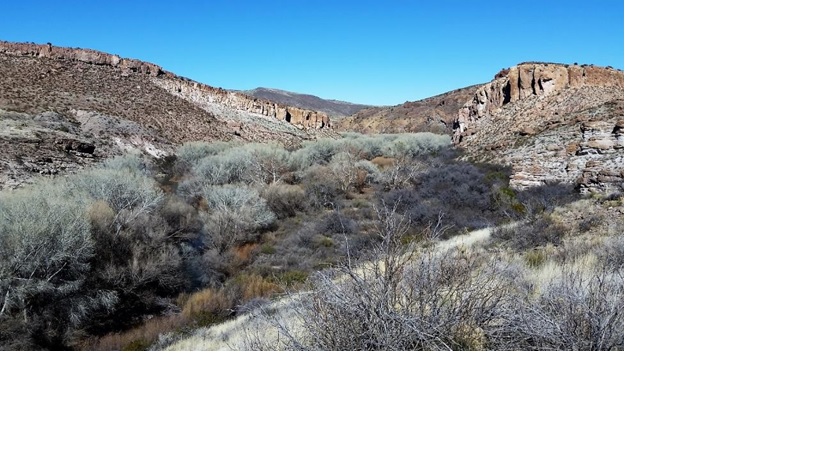
Winter Adventures

I’m just back from a roadtrip to visit relatives back East. I’m still digesting my own experiences, which may turn into a column or two or perhaps further posts here. But no story of mine could possibly top the adventures of these Pennsylvania tourists at the Grand Canyon.   I try not to second-guess with these stories, but I came away with two lessons on this one. First, stay with the vehicle, and second, never split up. Also, build a fire — if nothing else will burn, siphon gas out of the tank, soak the spare tire and set it alight (important safety tip: remove tire from vehicle first).   May not do much to keep you warm but the column of black smoke can serve as a distress signal.

I would hope that even the most feckless back-country traveler would carry matches or a lighter, although this search and rescue guy apparently didn’t have one when he and his young family got stuck in the woods in November. Other than that omission, the lack of a cell phone and leaving his wife and kids in the vehicle while he tried to walk out, he did OK. At least they had Halloween candy for emergency supplies. Personally, I recommend an emergency kit like this, plus ax & shovel, water, blankets or sleeping bag, and e-rats for any back country travel, even on paved roads and regardless of the season..

I’m kind of surprised the PA family was on the North Rim. I know the Lodge up there is closed, and I thought even the paved road to the Rim was closed in winter. Story doesn’t say what they were driving, but I wouldn’t venture into that country without a sturdy 4WD pickup towing a snowmobile this time of year.

El Tigre

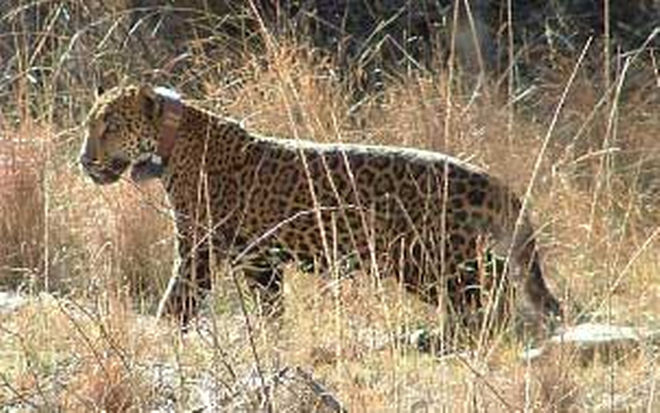
A trail camera somewhere in the Huachita Mountains of SE Arizona recently captured a candid selfie of a jaguar. Though not uncommon in the Amazon Basin of South America and still clinging precariously to a niche in the Sierra Madre, there are no known breeding populations of the big cats north of the border.  The one snapped in the Huachitas is apparently a mature male, which roam further from home than the females, and almost certainly a visitor from Mexico. The largest felines in the Americas and close relatives of tigers and lions, mature jaguars can weigh more than 200 pounds and measure six feet from nose to the base of the tail. They’re “stalk and ambush” predators with powerful jaws who have been known to take down an 800-lb. bull and drag it away.  Beautiful animals, but not one you would want to meet on a hiking trail at night.


Cartas Topográficas

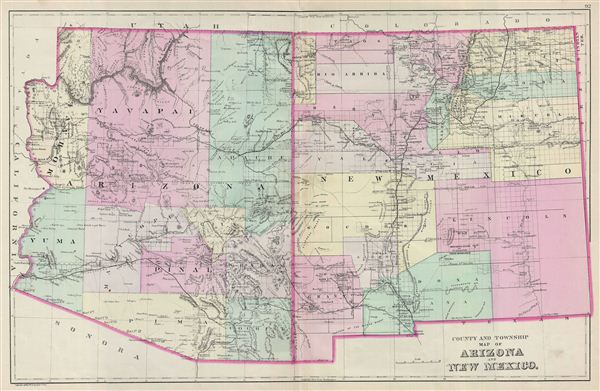
Learning new stuff gets tougher as you age.  Fewer of the old neurons firing or something. I don’t understand the mechanics, but I know it’s true. Right now I’m trying to learn  cartography in Spanish. El Instituto Nacional de Estadistica y Geografia in Mexico has been more than patient with my rudimentary Spanish and extremely helpful, but it’s an uphill battle.  Accumulating historic maps is an equal and related challenge. My latest find is an 1887 map of Arizona and New Mexico Territories.


Apache Maps

Two new additions to the maps section are a start toward tracing Apache trails from SE Arizona to Sonora and Chihuahua and up to SW New Mexico. The first is a current road map of northern Mexico, the second a section of a military map of the area commissioned by Gen. Carleton in 1864.

Chapters 7, 8 & Epilogue

I have posted the final three chapters in The Raid. I’d like to believe this is the end of this particular project, which I’ve been working on for five years, but since I’m constantly discovering new sources and revising my own thinking on the subject, I’m sure I’ll be continuing to tinker with the manuscript.

Revised Chapters 3 & 4

I’ve re-posted Chapters 3 and 4 to incorporate new info from Kuhn’s Chronicles of War, which is an excellent resource.  As with all my sources primary and secondary, he frequently differs from other accounts of the Raid. Since I’m in no position to judge which version is “The Truth,” I feel obliged to include them all. That makes for a sometimes tangled and confusing narrative, but I hope my primary thesis comes through: the Raid was not just a random outbreak of nihilistic violence, nor even solely an act of revenge conducted according to a primitive code of honor. It was a carefully planned attempt to disrupt the balance of power in the Southwest and so finally force the government to grant the Chiricahua their own homeland.

I’ll Drink to That

I try to keep this website focused on the Apache Wars and one incident in particular in that long and tragic conflict. Most of my other public thoughts are at NM News Service. But since I encourage people to get out and explore Apachería on the ground and experience the country for themselves, I feel the obligation to offer some occasional cautionary advice for those who take up that challenge, I sometimes stray into what I think of as “lost in the woods” stories, not to engage in vicarious thrill-seeking or voyeuristic schadenfreude but to explore whether these incidents carry a valuable life lesson.

Such a one is this recent story from California, where a young couple wandered away from their vehicle in the Imperial Sand Dunes on the Cal-Mex border and were finally picked up by the Border Patrol five days later, very hungry and very, very thirsty.

I won’t criticize these poor folks; I got lost on a quarter-mile nature trail myself, years ago, and still haven’t lived it down. Dunes are so alien a terrain it’s very easy to get disoriented. To me the only more bewildering country is the hoodoos in De Na Zin and the Bisti in northwestern New Mexico. In those places even a compass is of limited utility; a good GPS is a must. The lesson, as always, is “Be Prepared.” Never get out of sight of your vehicle without the equipment you need to survive if not thrive.

A more interesting aspect of the California story is the report they drank their own urine to relieve their thirst. This detail shows up occasionally in survival stories and always raises the reaction: uck! The response to that, of course, is you’ve never really been thirsty. Overcoming that first hurdle, the question becomes: does it work?

There is water in the desert, of course – if you have the time and tools to get to it. You can dig a hole, if you have an entrenching tool or sturdy knife, and cover it with plastic, if you have plastic sheeting, to condense water from the air. Certain cactus plants will yield some moisture, but it’s often bitter and obtained only at the cost of more sweat than you want to expend.

So urine is if not an attractive option at least an efficient one. Your pee is 95% water; the problem lies in the waste products your body wants to discard. Plus, while I won’t get into the whole dehydration thing here, suffice to say your body is discarding less liquid through the kidneys and so the concentration of toxins increases as you recycle.

As you expect with any weird topic, there’s a lot on the web about all this (including some sites that are really disturbing). Short answer is, yes it will work, for a very short period of time. These two hikers were lucky to make it as long as they did.

Tim’s Photos

Tim Hamilton has been kind enough to share some of his photos of the Bootheel country.  I’ve posted them with his comments in The Warpath. He’s right that you really can’t understand the terrain from maps no matter how detailed, nor from even the best pictures. You have to experience it on the ground. Even so, he does a pretty good job of capturing the look and feel of the country, and he’s found a lot of hidden places over the years.