Death in the Desert

This story reminded me of the old picture above, which appeared in the June 2014 Wild West.  This was also an Arizona case, and I believe the skeleton’s location might have been the country around where Roosevelt Dam was built sometime before 1910. I don’t know anyone ever identified the dead man, however. The skull in the more recent case has been ID’d but there’s no hint as to where the rest of his remains rest of how they came to be separated from his head, or how he came to be out in the desert in the first place.

Nana and his warriors left quite a few corpses in the mountains and desert, of course. I’ve seen a couple of graves myself and can guess where there are others. But it’s likely some were never found or discovered so much later they were never identified as the old man’s victims.

Snake Season

An off-topic but important reminder for anyone who enjoys hiking & camping in the Southwest. This is the time of year when rattlers begin to stir from their winter sleep, and warm days and cool nights make them active during the daytime, when people are also out and about. Here’s my advice.

Lions, oh my!

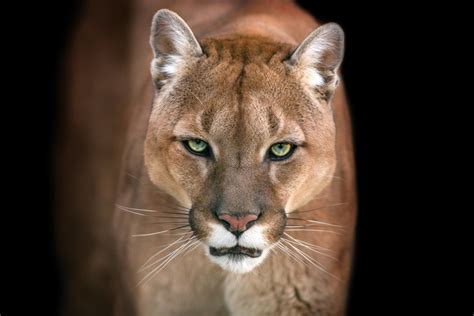
This is not a wildlife site, but since I have been adding posts about coyotes, it’s only fair to add this one on cougars. Just outside the womb of urbanization the world is a dangerous place, a truism unrecognized by too many young people today.

Trickster 2

I don’t want to beat a dead coyote, but I  have a couple comments about this article and the folks who wrote it. I don’t know when we decided as a society that hunting coyotes was a bad thing. We have bass-fishing tournaments back East and we used to have rattlesnake roundups out here (I can’t recall when I last heard of one, but can’t recall anybody protesting them).

One of the more irritating ad hominems from the coyote-huggers is to characterize hunters as “beefy, middle-aged men in camouflage, guns in hand and dead animals no one is ever going to eat piled in trucks.” In fact, hunting coyotes is a highly skilled and challenging sport.

Also, re the “animals no one is ever going to eat” crack. If we don’t eat them, we compete with them for our food. We eat chickens and so do coyotes; we eat beef and lamb, and coyotes kill both. If Coyote Project’s biologist observed the cute and playful side of Don Coyote, a quick search of Coyote Killing Sheep will show another side of Canis latrans. Another, less sentimental way to look at that pickup full of dead coyotes is as critters who won’t be killing your neighbor’s cat or some rancher’s lambs next week.

The Coyote Project people undermine their own case against hunting by emphasizing that the coyote is under no threat of extinction. “Coyotes can withstand as much as a 70 percent yearly kill rate without suffering any decline in their total population.”

Ironically, by hunting him we are enabling the coyote to pursue his “Manifest Destiny,” according to Coyote Project. By killing off the slowest and dumbest, we’re forcing a rapid evolution of the species. We’re breeding a super-coyote that’s spreading across the continent.

Logically, Coyote Project should thus be in favor of hunting them, since it’s producing a bigger, faster, smarter coyote. It’s hard to avoid the conclusion that the California crusaders are just against hunting in general and see the coyote as a useful pawn in a much more ambitious campaign. NM was just one of six states that introduced nearly identical anti-hunting bills this year, all backed by the Humane Society. It’s not clear from Project Coyote’s website what its relationship is with this campaign, but I’m betting it’s kissing-cousin close.

Finally, it burns my biscuits to have condescending, virtue-signaling Marin County effetes and Santa Fe dudes lecturing me on the “morality” of rural New Mexico. Much as I would like to, I wouldn’t presume to return the favor.

The trickster

A bill now awaiting the governor’s signature banning “coyote hunts” (sponsored by my own addle-pated Sen. Mark Moores) was the subject of an opinion piece in today’s Journal, authored by a pair who title themselves “Ambassador” and “Founder and Executive Director” of a northern California outfit called “Project Coyote.”

Wile E. Coyote makes his appearance in the lede, when a biologist sights a coyote “joyously toss a sprig of sagebrush in the air with her mouth, adroitly catch it, and repeat the act every few yards.” Instead of studying “the arch-predator of our time,” the scientist is instead discovering that Wile. E. is an “intelligent, playful creature,” according to Project Coyote.

Wrong. You see “the arch-predator of our time” in the mirror every morning as you brush your teeth. Notice those sharp ones prominent on either side of your jaw? Why do you suppose God (or Darwin, if you prefer) put them there?

The intelligent and playful Homo Sapiens rules the planet and we literally fought tooth and nail for the title. For also-rans check your local natural history museum for the remains of Canis dirus and Smilodon. We’ve cleared the ring of these, but Canis latrans remains a formidable challenger. Intelligent, resilient, adaptable and increasingly aggressive, it profits us not to underestimate him.

The Apaches and other indigenous inhabitants of the land knew him well and understood him better than the folks at Project Coyote ever will.  At this weekend’s Book Fair I picked up a copy of American Indian Myths and Legends, which lists 15 stories capturing the coyote in his many different incarnations.


Wile E. vs. Dudley

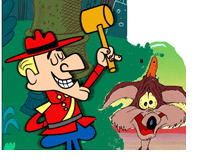
I continue to collect stories of human/coyote interactions, and I’m still unclear as to whether such conflicts are becoming more common as the urban/suburban/exurban interface encroaches on the habitat of Canis latrans (or vice versa) or I’m just paying more attention. Latest I’ve come across is from our neighbors to the north, where the RCMP (love the uniform, guys!) was called in to deal with an especially bold coyote in a town just north of Calgary.

HSNM Conference March 28-30

The 2019 N.M. History Conference is scheduled for March 28-30 in Albuquerque. As always there are some interesting topics on the agenda — witchcraft at Isleta Pueblo, Imperial German spies on the border, the career of our state’s most famous madam, Sadie Orchard, and much more. Full program is at http://www.hsnm.org/conference-2/

More coyotes

Ever since my own close encounter I’ve been accumulating random coyote stories. Many, like this and this, and this make ominous reading. Latest is the sad story of a 77-year-old woman attacked and killed on her early morning walk. Contra the odds in elder assault, the predator (or predators) who took her down were not bipedal but quadruped. Investigators are unsure whether the animal involved was a dog, a wolf or a coyote, but they’re confident it was canine. The environmentalists determinedly re-introducing wolves, not just in the Appalachians but all across the continent, are doubtless hoping DNA tests will eliminate the Red Wolf as a suspect. Odds are on canis familiaris. Uncontrolled and aggressive dogs are a familiar hazard to hikers and joggers; feral packs are not unknown in rural areas nationwide; I’ve encountered them myself on the fringes of Dine’ and in northern Mexico. But a coyote kill of a human would be a significant development in our relationship with the species.


Desert Wildflowers

This week’s storm dropped 3.5  inches of snow in Albuquerque, 3 feet in Flagstaff,  lots of rain and snow all over the Southwest. That’s good news for a colorful bloom this spring. DesertUSA is tracking developments.

That Predator Stare

According to the Sunday Journal’s letters page, we’re back once again to a heated argument over coyote-killing contests. And once again I’m wondering whether we would have the same argument over killing rats. (And speaking of rats, L.A. is experiencing an epidemic of Typhus, the disease known in olden times as the killer of armies. The trajectory is the same as in the bubonic: from rats to fleas to humans. and is directly traceable to poor public hygiene.)

So am I comparing coyotes to rats? No. Coyotes are both smarter and larger — and there’s some disquieting evidence they’re getting smarter faster than we are. And while the rats have been no more than holding their own in the cities, the coyote has expanded its range over the last century from the Western Plains to the entire continental U.S.

I’ve been collecting coyote stories for a while, and will share them in a subsequent post. For now, I’d just like to ponder why anybody is more opposed to killing coyotes than killing rats.

Are coyotes somehow cuter and more lovable? I think we can thank Chuck Jones for that. His Wile E. Coyote is one of my all-time favorite comic characters. But he’s no more real than Inspector Cloiseau.

I was eye to eye with a coyote not too long ago, not a half-mile from my house. I had seated myself close to what I now surmise was the path to the den where he and his mate were raising pups. He came trotting down the trail pretty obliviously, and not until he was downwind did he abruptly stop to check me out.

We eyed each other cautiously from a distance of no more than 12 or 15 feet. I was seated and so less potentially a threat, but I had a stout walking stick between my knees, so I might be formidable in defense. I could see him calculating the odds as we stared at each other.

No one who has seen a coyote upclose could mistake it for a dog. The eyes are a dead giveaway — bright yellow and cold as ice. As one writer puts it:

“… he held still and looked at me, unblinking. It was the predator appraisal. How would I taste? Was I worth killing and eating? A pale calm yellow stare, devoid of fear.”